

For a restaurateur working in Italy, the label decides whether goods clear, sit in the warehouse, or go back.
Within the European Union the framework is harmonised: Regulation 1169/2011 imposes the same structure everywhere — fourteen allergens typographically highlighted inside the ingredient list, a nutrition declaration expressed per 100 g or 100 ml, energy given in both kJ and kcal. Outside the Union that structure no longer holds. A label is not translated: it is rebuilt.
Allergens. The United States recognises nine, sesame included since 2023, and groups them in a separate "Contains" statement rather than highlighting them within the list itself. Celery, mustard, lupin, sulphites and molluscs, mandatory in Europe, do not appear there at all. Anyone running a kitchen abroad therefore has to work from the producer's technical data sheet rather than from the label: that is the document where shared production lines and cross-contamination risks are declared.
Nutritional values. This is not an arithmetic conversion. The US Nutrition Facts panel is calculated on a serving size defined by law, adds a line for added sugars and ignores kilojoules. Recalculating the figures for a pesto or a preserve means rebuilding the data, not rounding it.

"Made in Italy". In Europe, if the label states Italian origin and the primary ingredient comes from elsewhere, that provenance must be indicated (Reg. 775/2018). "Produced in Italy" and "Italian ingredients" remain two distinct claims: the first describes where processing took place. Outside the EU, customs rules on origin may diverge from what the label says, and the check has to be made before the order, not at the border.
PDO and PGI. Protection is full in Europe, partial elsewhere, and depends on the bilateral agreements in force. In the United States, several names that are protected designations in Italy circulate as generic terms: an Asiago or a Gorgonzola bought locally may have no connection whatsoever with the consortium product.
Dates. "Use by" is a microbiological safety limit. "Best before" concerns organoleptic quality. Confusing the two means throwing away good product, or serving one that should never have been served.
One last point, and the most important. In the destination market the operator responsible for the label is the importer, not the Italian producer. Always ask for an up-to-date technical data sheet, a certificate of analysis and a written allergen specification, and keep them on file. In the event of an inspection, the original Italian label is not a defence.

On Saturday, 18 July 2026, at 5:00 p.m., in the presence of the President of the Veneto Region, Alberto Stefani, the ribbon was cut for the new industrial complex dedicated to innovation, growth, and international expansion of the company specializing in professional cooking ovens.
A major investment in the future of Veneto’s manufacturing industry and in the development of the local area. At 5:00 p.m., at the headquarters in Via Marco Polo 11 in Borgoricco, the official inauguration of Tecnoeka’s new production hub took place, along with the opening of the new corporate headquarters of Sinofcold (the sister company dedicated to professional refrigeration). The event marks a significant milestone in the growth path of both companies and demonstrates their commitment to continuing to invest in innovation, production capacity, sustainability, and international development, while maintaining strong roots in the territory.
After welcoming guests and hearing remarks from local authorities and company management, the traditional ribbon‑cutting ceremony was followed by a guided tour of the new production and executive spaces. During the visit, CEO Matteo Volpato emphasized that “the new complex was created to meet the needs of a growing international demand and to support the group’s future development plans, with Tecnoeka alone aiming to reach €50M in revenue thanks to the introduction of the two new professional oven lines, Redwave and Redflash.”

An investment for the territory: employment growth
The inauguration of the new production hub represents a significant corporate investment with broad strategic benefits for the surrounding area. The new facility will actively contribute to the growth of local employment, the development of professional skills, and the enhancement of Veneto’s manufacturing excellence and Made in Italy. Once fully operational, the new plant will bring the total number of employees to over 200 collaborators, with a notable 40% female workforce and an average age of around 40 years. A diverse team with varied experiences and skills, working together to build something even greater.
“It is reassuring to see that our entrepreneurs continue to invest despite the severity of geopolitical crises and the resulting economic challenges,” said Alberto Stefani, President of the Veneto Region. “This forward‑looking vision has always distinguished our land and made it one of the leading production hubs internationally. Today’s inauguration in Borgoricco is the result of a major investment by an industry leader in professional cooking and refrigeration. But it is also an investment for all of Veneto, confirming once again our ability to meet the challenges posed by production, innovation, and sustainability. These are crucial issues, starting with the need to be present in new markets. The opening of the new Tecnoeka hub shows that Veneto’s companies do not intend to be caught unprepared. It is a source of pride for everyone who contributes to this reality.”

With this expansion, Tecnoeka now covers an area of over 20,000 sqm, divided among production facilities, R&D laboratories, offices, and training and showcooking spaces. The company’s full production capacity reaches 35,000 professional ovens per year, distributed across four product lines and destined for hundreds of Italian and international customers thanks to an extensive internal and external sales network operating through 4 subsidiaries and 3 sales offices worldwide. The new production facility adds further surface area to the existing photovoltaic system: an additional 410 kW increases total installed capacity to 1,130 kW, covering 45% of the company’s average annual energy needs.
“The expanded headquarters is now the ideal meeting point between architecture and design, production and technology. A place that gives concrete form to our brand’s growth ambitions,” concluded President Cristina Lora.
Alongside Tecnoeka, Sinofcold also finds a new home today. The company specializes in the design and production of professional food refrigeration equipment. Its range includes blast chillers and freezers, proofing retarders, refrigerated cabinets, and other solutions dedicated to professionals in foodservice, baking, pastry, and the food industry.
The new 5,000 sqm headquarters represents another step in the company’s consolidation and development path. Sinofcold has doubled its revenue over the past four years, reaching nearly €3M in 2025. The stated goal is to reach €10M in revenue and 50 employees, strengthening its presence in international markets and seizing new growth opportunities in an evolving sector.

Among the great protagonists of Italy’s new wine identity, Carricante from Mount Etna stands out as one of the most fascinating wines for chefs and sommeliers in the international restaurant industry. Born on the slopes of Mount Etna, Europe’s highest active volcano, this grape variety tells the story of an extreme territory shaped by volcanic soils, high-altitude vineyards and heroic viticulture capable of expressing elegance, minerality and remarkable depth.
For many years, international wine lists were dominated by famous Italian names such as Barolo, Brunello and Amarone. Today, however, restaurants are increasingly searching for wines that offer authenticity, heritage and a strong connection with their place of origin. Carricante perfectly responds to this new demand: it is distinctive, contemporary and ideally suited to fine dining.
Carricante is an indigenous Sicilian grape variety mainly cultivated on the eastern slopes of Mount Etna, particularly within the Etna DOC area. Its name is believed to come from its generous productivity: “Carricante” refers to a vine capable of producing abundant clusters that could “load” a farmer’s cart.
The uniqueness of this wine comes from its extraordinary environment. Vineyards can be found at elevations above 900 metres, growing on soils formed by lava and volcanic materials rich in minerals. The significant temperature variations between day and night allow the grapes to develop complex aromas and exceptional freshness.
The result is an elegant white wine characterised by vibrant acidity, citrus notes, floral aromas, mineral nuances and a surprising ability to age gracefully.
Carricante is an extremely versatile wine for professional restaurants. Its structure and mineral character make it the ideal partner for dishes requiring balance, precision and elegance.
• Raw seafood and oysters: the wine’s freshness enhances marine flavours without overpowering their delicacy.
• Grilled or baked fish: its mineral profile perfectly complements sea bass, amberjack and red snapper.
• Contemporary Sicilian cuisine: dishes featuring sea urchin, citrus fruits, capers and Mediterranean vegetables find a natural match in Carricante.
• Fresh cheeses: buffalo mozzarella, ricotta and goat cheeses highlight its aromatic character.
• Asian and fusion cuisine: thanks to its acidity and freshness, it pairs beautifully with spicy ingredients and raw fish preparations.

Mistakes to avoid when serving Carricante
To fully appreciate Carricante, it is important to avoid some common mistakes:
• serving it too cold, which reduces its aromatic expression;
• pairing it with overly rich dishes or very intense sauces;
• considering it only as a young white wine: premium versions can develop beautifully over several years;
•using glasses that are too small and limit the complexity of its bouquet.
An ambassador of the new Italian wine identity
For international restaurants, Carricante from Mount Etna represents much more than a wine: it is a story of territory, resilience and biodiversity. Each bottle carries the landscape of the volcano, the dedication of local winegrowers and a thousand-year-old agricultural tradition.
Adding Carricante to a wine list means offering guests an authentic Italian experience, beyond the most familiar wine regions, and showcasing a Sicily that is elegant, contemporary and deeply connected to its land.
Carricante is the expression of a new generation of Italian wines: rooted in tradition, shaped by nature and ready to inspire chefs and wine lovers around the world.

1. High-volume performance
Available in 50, 100 and 150 litres to meet different production demands.
2. Versatile cooking applications
Perfect for stocks, soups, sauces, stews, jams and slow-cooked recipes.
3. Greater operational efficiency
Immediate ignition and enhanced performance help streamline production.
4. Improved energy management
Designed to optimise output while reducing energy consumption.
5. Ergonomic operation
The ambidextrous handle allows comfortable access from either side.
6. Enhanced safety
The progressive drain system provides greater control during discharge.
7. Simplified maintenance
Accessible components make inspection and servicing faster and easier.
8. Ready for the future
Touch-control models are coming soon, offering increased precision and process consistency.
LOTUS Boiling Pans:
The next generation of high-volume cooking
www.lotuscoockers.it

For decades, Italian cuisine around the world has been associated with a few iconic symbols: pasta, Parmigiano Reggiano, extra virgin olive oil, prosciutto, pizza and great Italian wines. Extraordinary products that have helped build the reputation of Italian gastronomy worldwide. Today, however, international restaurants are experiencing a new evolution: the true luxury of Italian cuisine is no longer only about famous products, but about their provenance, their story and their connection with the people who create them.
Contemporary chefs are increasingly searching for ingredients capable of creating an experience, not simply a dish. A tomato grown by a small farmer, a cheese produced in a mountain pasture, an oil made from an indigenous olive variety or an ancient grain can tell the story of a territory and transform a menu into a cultural journey.

Italy possesses one of the world’s richest food heritages thanks to its extraordinary biodiversity. Thousands of small producers preserve traditional techniques, local varieties and knowledge passed down through generations.
For an international restaurant, collaborating with these producers means offering something that cannot easily be replicated. An ingredient with a precise origin becomes a distinctive element of the culinary identity.
It is not simply about purchasing a raw material; it is about building a relationship: knowing the person behind the product, understanding the production methods and sharing an authentic story with guests.
The search for shorter supply chains has become a central element of high-quality gastronomy. Chefs want to know where ingredients come from, how they are cultivated or transformed and what impact they have on the environment.
This approach allows restaurants to highlight seasonal and local products, reduce the distance between producer and kitchen, and create more dynamic menus.
For an Italian restaurant abroad, this philosophy can become a powerful competitive advantage: telling the story of a small Sicilian farm, a Piedmontese cheese producer or an Etna winemaker creates a level of authenticity that international guests increasingly value.
Biodiversity: Italy’s hidden gastronomic treasure
One of the most fascinating aspects of Italian cuisine is the extraordinary number of ingredients that remain relatively unknown outside Italy.
Basilicata’s crusco pepper, Montoro copper onion, ancient legumes, local grains, wild herbs and small coastal fish species are just some examples of products that often remain outside global distribution networks but are rich in identity and character.
For chefs, these ingredients represent an endless source of creativity. Introducing a rare product to a menu allows restaurants to stand out and offer guests a true culinary discovery.
Chefs and producers: A new creative partnership
The relationship between chefs and producers is increasingly becoming a creative partnership. Chefs are no longer looking only for suppliers, but for knowledge keepers and guardians of tradition.
Visiting a territory, understanding farming techniques, participating in harvesting or learning transformation methods allows chefs to create a more conscious and personal style of cuisine.
These relationships also help restaurants communicate a deeper message: every ingredient has a history, and every dish can become a story.
International gastronomy is changing: luxury is no longer defined only by having the most famous products on the menu, but by being able to explain why an ingredient exists, who produces it and which territory it represents.
The future of Italian cuisine around the world lies in rediscovering its origins. Small producers, rare ingredients and authentic stories are the elements that allow chefs to create unforgettable dining experiences.
Because today, the true luxury of Italian cuisine is not only what guests eat — it is knowing where it comes from.

Pizza is not simply a food: it is a true symbol of culture, tradition and identity. It represents the very essence of Italian cuisine, recognised and loved in every corner of the world, capable of bringing people and generations together around a ritual of sharing and flavour. At MAM, this deep-rooted conviction passionately guides every choice we make, every detail we attend to, and every oven that leaves our historic workshop in Modena.
The Malaguti family has always believed that innovation and tradition are not opposing forces, but inseparable partners. With dedication and care, generation after generation, we have perfected our approach, combining cutting-edge technology with the craftsmanship and precision that only handcrafting can guarantee. This is how our ovens become the perfect fusion of past and future, embodying the best of both worlds.

The heart of perfect pizza: MAM ovens between tradition and innovation
Every MAM oven is the result of meticulous research focused on the highest-quality materials, innovative design and superior technical performance. Our aim is to create a harmonious balance between aesthetic beauty and functional excellence, transforming your professional kitchen into a true expression of personality and character. These are not merely tools of the trade, but true culinary masterpieces, designed for those who know that the perfect pizza begins long before the dough is rolled out onto the stone.
Our comprehensive range of ovens includes wood-fired, gas, combination and electric models, both static and rotating, designed to guarantee exceptional baking results, optimised energy consumption and meticulous attention to every single detail. Our solutions offer pizza chefs the chance to express their art to the full, guiding them step by step on the path to perfection, one pizza at a time.
If you’d like to find out more about our professional ovens and innovative pizza-baking solutions, please don’t hesitate to contact us. Together, we’ll take your pizzeria to new heights of excellence, combining the warmth of tradition with the energy of innovation. Mam: the beating heart of the perfect pizza.

Among the most fascinating products of Emilia’s gastronomic tradition, there is a speciality that is still relatively unknown outside Italy but has great potential for international restaurants: the Modena tigella. Small, round and apparently simple, it embodies a story of territory, conviviality and traditional rural cuisine.
Born in the Modena Apennines, tigella was originally a humble bread prepared by farming families. Its name comes from the traditional terracotta or refractory stone discs called “tigelle”, which were once used to cook the dough directly over the fire. Today, modern cooking plates are commonly used, but the product has preserved its authentic character: a lightly crispy surface and a soft interior, perfect for holding rich and flavourful fillings.
For international chefs, tigella represents an excellent example of an Italian food experience: a versatile product that can be reinterpreted as a gourmet bite, a tasting course, an appetiser or a convivial element in contemporary menus.
The traditional dough requires only a few ingredients:
• soft wheat flour
• water or milk
• yeast
• lard (according to the traditional recipe)
• salt
After preparing the dough, it is left to rest until it reaches the correct level of fermentation. Small discs are then shaped and cooked until they achieve their distinctive texture: golden and slightly crisp on the outside, soft and delicate inside.
The most traditional version is served sliced in half and filled with Modena pesto, a cream made with lard, garlic and rosemary. A simple yet highly distinctive combination that perfectly represents the culinary culture of the Modena Apennines.
Tigella is particularly suitable for international cuisine because it works as a small and versatile gastronomic base that can be customised in many ways.
Beyond the classic pairings with Emilia’s cured meats - such as Prosciutto di Modena, mortadella, coppa and aged cheeses - tigella can become the foundation for more contemporary interpretations:
• tigella with creamy cod, crusco pepper powder and Mediterranean herbs;
• tigella with Italian smoked salmon, ricotta and citrus flavours;
• tigella with prawns, stracciatella cheese and aromatic herbs.
• tigella with pumpkin cream, Parmigiano Reggiano and hazelnuts;
• tigella with mushrooms, cheese fondue and thyme;
• tigella with grilled vegetables, herb pesto and extra virgin olive oil.
• tigella with mascarpone cream and red berries;
• tigella with dark chocolate and hazelnuts;
• tigella with sweet ricotta and Italian honey.

To fully enhance tigella in an international menu, it is essential to respect its identity.
The most common mistakes include:
• Turning it into a simple sandwich: tigella is not just a bread bun; it is a traditional product with its own history, texture and cultural value.
• Adding too many ingredients: its strength lies in the balance between the bread and the filling.
• Using overly dominant flavours: very spicy ingredients or heavy sauces can hide the delicate taste of the dough.
• Serving it cold: tigella reaches its full potential when served warm, freshly prepared.
• Underestimating the importance of flour quality and cooking technique: these elements are essential to achieve the perfect texture.
A new star for Italian menus around the world
Modena tigella has all the characteristics sought by contemporary restaurants: a versatile format, strong regional identity, creative potential and the ability to create a shared dining experience.
For an Italian restaurant abroad, it can become a distinctive menu item: a small taste of Emilia that communicates the value of Italian regional cuisine, where tradition and creativity come together.
Introducing tigella to international menus means offering guests more than just a food product - it means creating an experience: the aroma of freshly baked bread, the flavours of the Modena Apennines and the convivial spirit of a region celebrated worldwide for its extraordinary culinary heritage.

From their production site in Mercato San Severino to kitchens around the world, the story of a brand that turned Campania's tomato into a global reference point.
Some products carry the memory of a place long before they reach the plate. Ciao's tomatoes are one of them: the deep red of volcanic soil at the foot of Vesuvius, the warmth of Campania's sun and generations of expertise passed from farmers to home cooks, who turned a seasonal fruit into a craft built on care and precise timing.
This is the heritage that Ciao - Il Pomodoro di Napoli set out to protect and carry beyond Italy's borders, starting from the vision of its founder, Lino Cutolo, who paired tradition with rigorous quality control and modern production methods.
The range centres on two signature products: the Roma-type peeled tomato, prized for its firm flesh and rounded flavour, and the San Marzano Tomato of the Agro Sarnese-Nocerino D.O.P. area, certified for its fine texture, low acidity and traceable origin through every stage of the supply chain. Crushed tomatoes, passata, cherry tomatoes, concentrate and a dedicated legumes line complete the offer.
Behind every can is the Ciao Method: tomatoes move from harvest to packaging within hours, preserving colour, aroma and flavour intact. That same attention to quality runs through the Ciao's Circle, the international network of chefs and pizza makers who represent the brand in kitchens worldwide, from fine dining tables to neighbourhood pizzerias.
Three appointments will keep that story moving this summer: Pizza Village Napoli (July 7-12), Pizza Village London (July 23-26) and Pizza Village Milano (September 8-13), three stops dedicated to Neapolitan pizza and Italian gastronomic culture.

When international diners think about Italian seafood cuisine, they often associate it with a few iconic ingredients: shrimp, tuna, swordfish and other well-known products. Yet, along Italy’s more than 7,000 kilometres of coastline lies a much richer gastronomic heritage, made of local ingredients, traditional preservation techniques and unique species that tell the story of extraordinary territories.
For chefs in the international restaurant industry, rediscovering these ingredients means bringing a more authentic vision of Italy to the table — an Italy defined by biodiversity, craftsmanship and flavours that cannot easily be replicated elsewhere.
Among the most fascinating ingredients for contemporary professional kitchens is Colatura di Alici di Cetara, a traditional anchovy essence from the Amalfi Coast, produced through the natural maturation of anchovies preserved in salt according to an ancient artisanal method.
Its value lies in its concentration: just a few drops can add depth, umami, saltiness and complexity to a dish. For international chefs, it can become a powerful ingredient to reinterpret flavours traditionally associated with Asian fermented condiments such as fish sauce or miso.
Menu ideas:
• artisan spaghetti with garlic, extra virgin olive oil, Colatura di Alici and lemon;
• fish tartare with a Colatura-based emulsion;
• grilled vegetables with a Mediterranean dressing.
Produced from cured and dried mullet roe, bottarga is one of Sardinia’s most refined culinary treasures. Its aromatic profile combines marine notes, delicate saltiness and a long, elegant finish.
In fine dining, bottarga is a sophisticated ingredient capable of transforming simple dishes into memorable experiences.
Menu ideas:
• handmade linguine with bottarga, citrus fruits and Italian extra virgin olive oil;
• fish carpaccio with bottarga shavings;
• potato velouté with bottarga and Mediterranean herbs.

Often overshadowed by octopus and squid, moscardini (small musky octopus) are a versatile ingredient with great culinary potential. Their delicate texture allows chefs to explore both traditional recipes and modern interpretations.
Menu ideas:
• slow-cooked moscardini with tomato and olives;
• warm moscardini salad with potatoes and citrus;
• Mediterranean small plates for international restaurant concepts.
Alici di Menaica, from the Cilento coast, are caught using an ancient selective fishing technique that preserves their quality and integrity. They represent a perfect example of how sustainability and haute cuisine can work together.
Their delicate flavour makes them ideal for:
• gourmet starters;
• light marinades;
• pairings with Italian butter, artisan bread and mineral white wines.
Small, precious and deeply connected to Adriatic coastal traditions, telline (Mediterranean wedge clams) represent the purest expression of the Italian sea.
Menu ideas:
• handmade linguine with Adriatic telline;
• contemporary seafood risottos;
• elegant starters with aromatic herbs and citrus.
For chefs abroad, these ingredients represent a unique opportunity: they tell the story of a lesser-known Italy, one that is authentic, sustainable and deeply connected to local communities.
A possible tasting menu dedicated to Italian seafood heritage could include:
Starter
Alici di Menaica marinated with Italian butter and artisan bread.
First Course
Spaghetti with Colatura di Alici di Cetara, lemon and parsley.
Main Course
Mediterranean moscardini with seasonal vegetables.
Final Tasting
Sardinian mullet bottarga with citrus fruits and extra virgin olive oil.
The future of Italian cuisine on the international stage is not only about the most famous products. Today, true culinary luxury lies in discovery. Through these hidden treasures of the Italian sea, chefs can transform a menu into a journey across coastlines, traditions and communities that continue to preserve one of the world’s most extraordinary gastronomic heritages.
Accessibility, hygiene and operational efficiency are driving new priorities in professional bakeries and pizzerias

In professional kitchens, bakeries and pizzerias, productivity is no longer measured solely by output. Today, operators are increasingly focused on workflow optimization, equipment accessibility and hygiene management. As a result, features once considered optional are rapidly becoming essential elements in the selection of dough preparation equipment.
Among these, lift-head technology has gained particular attention within the professional mixing segment.
While the primary function of a dough mixer remains the production of consistent, high-quality dough, ease of access to the mixing area can significantly improve day-to-day operations. Lift-head configurations allow operators to access the bowl more easily during cleaning procedures, ingredient handling and routine inspections, helping to streamline workflow while supporting hygiene standards.
This is particularly relevant in businesses where multiple dough batches are prepared throughout the day. Faster cleaning and easier access to critical components can contribute to reduced downtime between production cycles and more efficient management of daily operations.
The growing focus on sanitation has further accelerated interest in equipment designed to simplify maintenance activities. In environments where cleanliness is a top priority, accessible machine designs help operators perform routine cleaning tasks more effectively and consistently.
Sirman addresses these requirements with solutions such as the Hercules TA VV series, developed to combine the advantages of spiral mixing technology with the practicality of a lift-head configuration. Designed for professional pizza and bakery applications, the range reflects the company’s commitment to developing equipment that responds to the real needs of foodservice operators.
As dough preparation continues to evolve, professionals are looking beyond pure mixing performance and evaluating how equipment integrates into their overall workflow. Accessibility, ergonomics and ease of maintenance are becoming increasingly important factors alongside reliability and product quality.
For bakeries, pizzerias and foodservice businesses seeking to optimize both production and operational efficiency, lift-head mixers represent an increasingly valuable solution in the modern professional kitchen.
Italian cuisine is full of ingredients capable of telling the story of a territory through a single gesture. Crusco pepper, an outstanding product from Basilicata, is one of them: a simple ingredient born from rural tradition that today can become a valuable element in professional kitchens around the world.
The name comes from the local dialect word “crusco”, meaning “crispy”. It is a sweet pepper, generally from the Senise PGI variety, harvested at the end of summer, naturally dried and then quickly fried to achieve its distinctive texture: light, delicate and incredibly aromatic. The result is an ingredient that combines sweetness, vegetal notes, toasted aromas and pleasant intensity, without an aggressive spiciness.
For international chefs, crusco pepper represents a unique opportunity: it is a highly distinctive ingredient capable of transforming contemporary dishes by adding colour, texture and an authentic Italian story.

The most traditional use of crusco pepper is as a crispy element added to pasta dishes and regional recipes. Its most famous application is with strascinati pasta, garlic, olive oil and crusco pepper, where the pepper becomes the key ingredient alongside a few essential elements.
In modern cuisine, however, it offers many more possibilities:
• As a crispy topping for risottos, soups and velvety creams, creating a contrast between softness and crunch.
• As an aromatic powder, finely ground and used as a seasoning for meat, fish or vegetables.
• As a gourmet ingredient for starters, paired with fresh cheeses, creams and mousses.
• As an element for flavoured oils and sauces, adding depth, colour and Mediterranean character.
• As an alternative to savoury crumble, giving personality to contemporary dishes.
Crusco pepper reaches its full potential when paired with ingredients that have a creamy or rich texture.
Excellent combinations include:
• burrata and buffalo mozzarella;
• fresh ricotta and aged cheeses;
• cod and delicate white fish;
• eggs and yolk-based preparations;
• potatoes and roasted vegetables;
• white meats such as chicken, rabbit and pork;
• legumes, especially chickpeas and beans;
• structured white wines and Mediterranean rosé wines.
A particularly interesting combination for international restaurants is the contrast between crusco pepper and seafood ingredients. A fish tartare, cod fillet or seafood dish can gain additional complexity thanks to its toasted notes and distinctive crunchy texture.
Crusco pepper is a delicate ingredient and should not be used simply as a decorative element.
The most common mistakes are:
• Covering its flavour with overly intense ingredients, such as very spicy sauces or excessively aged cheeses.
• Using too much of it, as its aromatic character can overpower the entire dish.
• Losing its crunchiness, by adding it too early to moist preparations.
• Confusing it with a hot chilli pepper, limiting its use only to spicy cuisines.

To fully appreciate crusco pepper, it is essential to respect its nature: a few high-quality ingredients, attention to balance and a focus on textures. It is a product born from humble cuisine, yet it possesses all the qualities demanded by contemporary gastronomy: certified origin, strong territorial identity, versatility and the ability to create a memorable dining experience.
Introducing crusco pepper into international menus means offering guests an authentic taste of Basilicata: the flavour of the sun, the Lucanian hills and a gastronomic tradition that today can engage with the most innovative cuisines in the world.
Crusco pepper is not just an ingredient — it is a story of Italian craftsmanship, ready to be rediscovered by chefs worldwide.
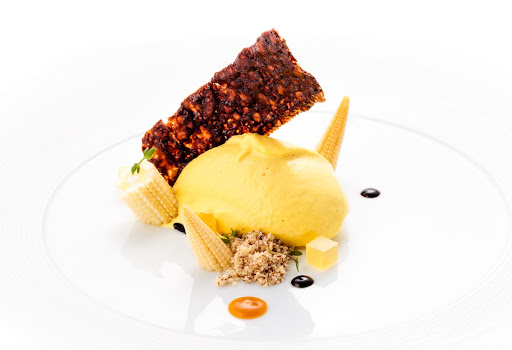
For decades, artisan gelato has been one of the world's most recognizable symbols of Italian food culture. Traditionally enjoyed as a dessert or a refreshing summer treat, it is now taking on a new role in professional kitchens. Across Italy, chefs are reimagining gelato as a versatile ingredient capable of enriching tasting menus, complementing savoury dishes and creating memorable dining experiences.
This evolution reflects a broader trend in fine dining: the search for balance between temperature, texture and flavour. Gelato is no longer confined to the end of the meal. Instead, it is becoming an integral part of the culinary journey, offering chefs new creative possibilities while reinforcing the authenticity of Italian craftsmanship.
One of the most successful applications is plated gelato, where presentation becomes as important as flavour. Seasonal fruit, single-origin chocolate, nuts, aromatic herbs and extra virgin olive oil are transformed into elegant compositions that highlight the quality of carefully selected ingredients. Unlike the traditional cone or cup, plated gelato allows chefs to introduce contrasting textures, warm elements and refined garnishes, creating desserts that are both visually striking and gastronomically sophisticated.
Equally interesting is the growing use of savoury gelato. Parmesan, Gorgonzola, buffalo mozzarella, basil, tomato and even porcini mushroom gelato have found their place alongside seafood, cured meats and vegetable-based dishes. A spoonful of Parmesan gelato served with asparagus, or basil gelato accompanying marinated tomatoes and burrata, offers an unexpected contrast of temperatures while enhancing the natural flavours of the ingredients.
In tasting menus, gelato is increasingly used as a transitional course between savoury and sweet. Citrus sorbets, herb-infused gelato or lightly salted dairy-based preparations help cleanse the palate while preparing guests for the next course. This approach not only surprises diners but also demonstrates technical precision and creativity.
For restaurants, embracing artisan gelato represents more than a culinary choice—it is a business opportunity. Producing gelato in-house or collaborating with local artisan gelato makers allows restaurants to develop exclusive recipes, strengthen their identity and offer guests a signature experience that cannot easily be replicated.
Professional tips for introducing artisan gelato into restaurant menus:

As international diners continue to seek authentic and memorable experiences, artisan gelato offers restaurants an opportunity to reinterpret one of Italy's greatest gastronomic traditions. Far beyond dessert, it has become a sophisticated ingredient capable of inspiring creativity, enhancing menus and celebrating the innovation that continues to define contemporary Italian cuisine.

Located in the heart of the Aeolian archipelago, a UNESCO World Heritage destination, Salina Island represents one of the most fascinating destinations for chefs seeking authenticity, biodiversity and ingredients capable of telling the story of a unique territory. Less internationally known than other Sicilian destinations, Salina preserves a volcanic cuisine deeply connected to the land, the sea and an agricultural tradition shaped over centuries.
For the international professional restaurant sector, Salina is an open-air gastronomic laboratory: a place where small producers, heroic farming practices and traditional techniques offer new inspiration for contemporary menus.
A chef-focused gastronomic itinerary can begin in Santa Marina Salina, the island’s main port and the ideal starting point to discover local producers and artisans. Here, the culinary journey begins with the flavours of the sea: blue fish, artisanal preserves, capers and traditional seafood products showcase a cuisine that is simple yet rich in identity.
The second stage leads to Salina’s vineyards, where one of the Aeolian Islands’ most iconic wines is produced: Malvasia delle Lipari. Grown on volcanic soils and often cultivated on small terraced plots, this wine represents an extraordinary example of heroic viticulture. For international chefs, visiting local wineries means understanding the value of terroir and discovering innovative pairings with desserts, aged cheeses, Mediterranean cuisine and seafood dishes.
A must-visit experience is exploring the cultivation of Salina capers, one of the island’s most representative ingredients. Hand-harvested and preserved according to traditional methods, these capers are a valuable resource for professional kitchens: they add intensity and character to pasta dishes, sauces, tartares, white meats and gourmet preparations.
The identity of Salina is shaped by its volcanic landscape, which has created unique conditions for agriculture. The island is rich in olive groves, citrus orchards, vegetable gardens and Mediterranean crops that benefit from mineral-rich soils and a particularly favourable climate.
Visiting chefs can explore small producers of extra virgin olive oil, organic farms and local restaurants that reinterpret traditional recipes such as pasta with Aeolian pesto, tomato preserves, Mediterranean salads with capers and freshly caught seafood dishes.
Salina is not only a tourist destination but also a source of professional inspiration. A gastronomic tour of the island allows chefs to meet producers directly, understand sustainable cultivation techniques and develop new ideas for contemporary Italian menus.
Day 1 – Land and sea
• Arrival in Santa Marina Salina
• Visit to local caper producers
• Traditional Aeolian cuisine tasting experience
• Meeting with local fishermen
Day 2 – Wine and biodiversity
• Tour of Malvasia delle Lipari wineries
• Walk through terraced volcanic vineyards
• Wine and local product tastings
• Dinner featuring a territorial tasting menu
Day 3 – Gastronomic innovation
• Visit to local farms and producers
• Workshop with chefs from the island
• Creation of contemporary dishes inspired by local ingredients

For the international restaurant industry, Salina represents a new frontier of Italian gastronomic excellence: an authentic territory where the volcano, the sea and Sicilian culture meet the creativity of chefs. Bringing ingredients such as capers, Malvasia wine, olive oil, citrus fruits and Aeolian specialties into restaurant menus means offering guests more than just flavour — it means telling the story of an island through its history, landscape and the people who preserve this extraordinary heritage every day.
Salina is a destination where tradition becomes innovation and where every ingredient carries the identity of a unique volcanic landscape.

In professional kitchens, salt is often treated as nothing more than a seasoning. Yet, much like extra virgin olive oil or wine, salt has its own identity, capable of influencing both flavour and texture. Grain size, origin, harvesting methods and mineral composition all play a role in shaping the final result on the plate.
Italy is home to some of the Mediterranean's most remarkable salt pans, where centuries-old traditions continue to produce high-quality sea salt that reflects the character of the surrounding landscape. For chefs, understanding these differences can open new possibilities in menu development and ingredient selection.
Among the country's best-known production areas are the salt pans of Trapani and Paceco in western Sicily. Here, sea salt is still harvested using traditional methods that rely on the natural action of the sun and wind. The result is a mineral-rich salt available in a variety of crystal sizes, making it suitable for a wide range of culinary applications. Fine crystals dissolve quickly in sauces, stocks and marinades, while larger flakes are ideal for finishing seafood, grilled vegetables or creating salt crusts for fish and meat.
On Italy's Adriatic coast, the historic salt pans of Cervia produce a sea salt prized for its delicate flavour. Naturally lower in bitter mineral compounds, Cervia salt delivers a clean, balanced salinity that enhances ingredients without overpowering them. This makes it particularly well suited to white meats, fresh vegetables and refined dishes where subtle flavours take centre stage.
For professional kitchens, relying on a single type of salt means overlooking an important culinary tool. Just as chefs carefully select different olive oils, vinegars or pepper varieties, choosing the right salt for each preparation can improve consistency, texture and overall flavour.
Professional tips for using salt more effectively:
• Choose fine sea salt for doughs, brines and recipes requiring even seasoning throughout the preparation.
• Use coarse crystals or salt flakes as a finishing touch to add texture and a gradual release of flavour.
• Match different salts to delicate ingredients such as raw seafood, seasonal vegetables or fresh dairy products, allowing their natural characteristics to shine.
• Store salt in airtight containers away from moisture to preserve its texture and quality over time.
Salt can also become part of the dining experience.

An increasing number of restaurants are introducing curated selections of Italian salts to accompany artisan bread, cultured butter or extra virgin olive oil. This simple gesture not only enhances flavour but also creates an opportunity to tell the story of Italy's diverse culinary landscapes.
At a time when authenticity, provenance and regional identity have become defining values in fine dining, rediscovering Italian sea salt means appreciating one of the kitchen's most underestimated ingredients. Far more than a simple seasoning, it is a subtle yet powerful element capable of elevating every dish while celebrating the richness of Italy's gastronomic heritage.

In professional kitchens, some pieces of equipment quietly become indispensable.
Boiling pans are among them. From preparing stocks, soups and sauces to stews, jams and other long-cooking recipes, they play a critical role wherever consistency, productivity and large-volume output are essential. But today's kitchens demand more than capacity alone.They require equipment that improves workflow, supports staff, reduces waste and delivers reliable performance day after day.
This is the philosophy behind the new generation of LOTUS Boiling Pans. Available in 50, 100 and 150 litre capacities, the 2026 LOTUS range has been engineered to combine power, ergonomics and operational efficiency.
Key features include:
• Enhanced performance with immediate ignition;
• Improved energy efficiency;
• An ergonomic ambidextrous handle for easier operation from either side;
• A progressive, stable drain system designed to increase operator safety;
• Easily accessible components for faster inspection and maintenance;
• A choice of heating systems to suit every professional kitchen: gas, electric and indirect water-jacket versions. The range is available within both the SuperLotus 70 and IperLotus 90 series, ensuring seamless integration into different kitchen layouts and production requirements. Touch-control models expand the offering, providing even greater precision, improved temperature management and enhanced process consistency.

At LOTUS, a boiling pan is not simply another piece of kitchen equipment.
It is a productivity tool designed to optimise operations, support kitchen teams and improve everyday performance. Because in professional catering, efficiency is not measured by litres alone. It is measured by how effectively your kitchen works.
In professional kitchens, some pieces of equipment quietly become indispensable.
Boiling pans are among them. From preparing stocks, soups and sauces to stews, jams and other long-cooking recipes, they play a critical role wherever consistency, productivity and large-volume output are essential. But today's kitchens demand more than capacity alone.They require equipment that improves workflow, supports staff, reduces waste and delivers reliable performance day after day.
This is the philosophy behind the new generation of LOTUS Boiling Pans. Available in 50, 100 and 150 litre capacities, the 2026 LOTUS range has been engineered to combine power, ergonomics and operational efficiency.
Key features include:
• Enhanced performance with immediate ignition;
• Improved energy efficiency;
• An ergonomic ambidextrous handle for easier operation from either side;
• A progressive, stable drain system designed to increase operator safety;
• Easily accessible components for faster inspection and maintenance;
• A choice of heating systems to suit every professional kitchen: gas, electric and indirect water-jacket versions. The range is available within both the SuperLotus 70 and IperLotus 90 series, ensuring seamless integration into different kitchen layouts and production requirements. Touch-control models expand the offering, providing even greater precision, improved temperature management and enhanced process consistency.
At LOTUS, a boiling pan is not simply another piece of kitchen equipment.
It is a productivity tool designed to optimise operations, support kitchen teams and improve everyday performance. Because in professional catering, efficiency is not measured by litres alone. It is measured by how effectively your kitchen works.

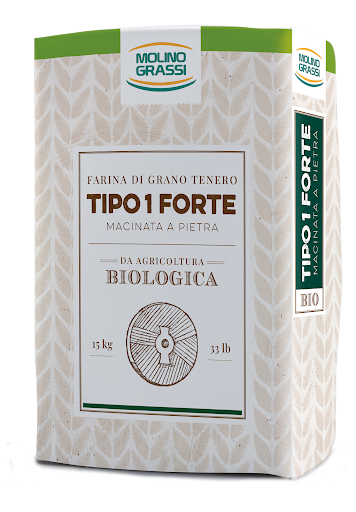
In the world of Italian pizza, where tradition and innovation meet every day on the workbench, Molino Grassi continues to stand out for its ability to anticipate the needs of professionals through high-performance flours with a strong identity. Two products, in particular, embody the company’s vision: Teglia 60x40, the new 2025 blend designed for large-format pizzas, and Tipo 1 Forte Bio, a perfect balance of technical performance, authentic flavour, and sustainability.
The return of large-format pizza
Tray-baked pizza is enjoying a renewed moment in the spotlight. No longer simply a practical solution for fast service, it has become a gastronomic format capable of expressing creativity, sharing, and craftsmanship. In this context, Teglia 60x40 offers a concrete answer to the demands of professionals seeking process consistency, high yields, and a distinctive finished product.
With Teglia 60x40, Molino Grassi introduces a blend specifically developed to meet the requirements of contemporary foodservice operations. The recipe combines soft wheat “00” flour, durum wheat semolina, rice flour, dried sourdough starter, and wheat germ. The result is a balanced, light, and fragrant dough with a well-developed, uniform crumb structure. Once baked, it delivers a pizza that is crisp on the outside and soft on the inside, maintaining its structure and texture even in larger portions.
From a technical perspective, the blend stands out for its versatility. It performs equally well in both direct and indirect dough-making methods and reaches its full potential in long fermentation processes, enhancing aromatic complexity and flavour depth. It is an invaluable ally for pizza-by-the-slice operations, bakeries, and foodservice businesses focused on repeatable processes and consistent quality.
The authentic character of Tipo 1 Forte Bio
While Teglia 60x40 reflects the modern evolution of pizza service, Tipo 1 Forte Bio represents a return to deeper, more distinctive flavours. Produced from carefully selected organic wheat and stone-milled, it preserves the grain’s most valuable components. Fibres, aromas, and nutritional properties remain intact, resulting in doughs that are vibrant, aromatic, and full of character.
Designed for professionals who require strength and reliability without sacrificing authenticity, this flour enhances bread, pizza, and focaccia with an open crumb structure, a crisp golden crust, and a rich, genuine flavour profile. Its strength supports extended fermentation and advanced dough processes, while its organic certification adds value that is increasingly appreciated by consumers seeking transparency and quality throughout the supply chain.
Two flours, one vision of quality
Together, Teglia 60x40 and Tipo 1 Forte Bio outline Molino Grassi’s vision for the future of pizza: impeccable technical performance, controllable and reliable processes, and raw materials capable of creating an emotional connection from the very first bite. It is a distinctly Italian vision, one that speaks equally to traditional pizzaioli and to the new generation of gourmet pizza innovators.

Italian aperitivo is not simply a moment of the day: it is an experience. It is the pleasure of slowing down, meeting people, and sharing something delicious before a meal. Born as a local tradition, aperitivo is now becoming an international format capable of winning over restaurants, cocktail bars, and hotels around the world.
For the international foodservice industry, it represents a great opportunity: exporting not just a product, but a true Italian lifestyle.
Aperitivo is more than a drink
In many countries, the pre-dinner moment already exists, but Italian aperitivo has a unique identity: it combines atmosphere, social interaction, and gastronomy.
A glass of wine, a cocktail, or a non-alcoholic drink becomes the starting point for an experience made of small bites, conversation, and discovery.
The value of Italian aperitivo comes from the perfect balance between simplicity and quality: authentic ingredients, carefully prepared dishes, and a presentation that tells the story of a territory.
For this reason, aperitivo is the perfect format for contemporary restaurants: flexible, adaptable, and with strong potential for customer loyalty.

How to create an Italian aperitivo outside Italy
Bringing aperitivo to the world does not simply mean offering an Italian drink. It means recreating the ritual.
The key is to build a recognizable experience:
An effective aperitivo must be quick to serve, visually appealing, and able to increase the time customers spend in the venue.
One of the most interesting trends is the pairing between drinks and food.
The cocktail is no longer just a beverage, but becomes part of the menu.
A glass of sparkling wine can accompany gourmet crostini, Italian cheeses, or seafood products; a citrus-based cocktail can enhance Mediterranean vegetables, light fried dishes, or small flavorful creations.
Food pairing allows restaurateurs to create personalized experiences and increase the perceived value of the offer.
Aperitivo also represents an important business opportunity.
Small portions make it possible to enhance premium ingredients, reduce waste, and create high-margin proposals.
Sharing boards, cicchetti, focaccia, preserves, olives, cured meats, and regional specialties can become a contemporary and international offer.
The strength of Italian aperitivo lies precisely here: transforming a simple moment into a memorable experience.
For chefs and restaurateurs around the world, the next big trend may not be a new recipe, but an ancient Italian ritual capable of communicating conviviality, quality, and pleasure.

In the global restaurant industry, premium dining is no longer defined solely by luxury ingredients or elaborate presentations. Today’s consumers are looking for authenticity, quality, and stories they can connect with. In this context, Italian ingredients have become powerful tools for chefs and restaurateurs seeking to elevate their menus and create a distinctive dining experience.
The value of Italian cuisine lies not only in its recipes but also in the exceptional ingredients that carry centuries of tradition, craftsmanship, and territorial identity. For restaurants operating outside Italy, incorporating selected Italian products can significantly increase perceived value while strengthening menu storytelling.
One of the most effective ways to highlight Italian excellence is through an “Ingredient of the Month” approach. Focusing on a specific product allows restaurants to educate customers, create seasonal specials, and reinforce the authenticity of their offer.
Few ingredients communicate Italian quality as effectively as Parmigiano Reggiano. Whether served in shavings, creams, sauces, or tasting experiences, it immediately conveys craftsmanship, heritage, and premium positioning.
Customers are often willing to pay more when they understand the product’s origin, aging process, and production methods.
Truffle remains one of the most recognizable symbols of Italian gastronomy worldwide. Even in small quantities, it transforms a dish into a premium experience.
Its value is not only linked to its rarity but also to the emotion and exclusivity it creates at the table.
Italian olives and high-quality extra virgin olive oil are increasingly appreciated by consumers looking for authentic Mediterranean flavours.
Used in tastings, appetizers, or signature dishes, they help communicate quality through simplicity.
Whether used in sauces, soups, or contemporary recipes, Italian tomatoes remain one of the strongest symbols of Italian cuisine.
Their connection to territory, seasonality, and tradition makes them a powerful storytelling ingredient.
Traditional vinegars add complexity and sophistication to dishes, while Italian cured meats continue to be among the most appreciated products in international hospitality.
Both categories offer restaurants the opportunity to create premium tasting experiences with relatively low food costs and high perceived value.
The success of Italian ingredients abroad is not based solely on quality. It is built on their ability to tell a story.
Today’s diners are not simply buying a dish; they are buying authenticity, culture, and experience.
For chefs and restaurateurs, Italian ingredients represent much more than menu components. They are strategic tools capable of transforming simple recipes into premium offerings and creating a stronger connection between customers and the Italian culinary lifestyle.

How to create an Italian aperitivo outside Italy
Bringing aperitivo to the world does not simply mean offering an Italian drink. It means recreating the ritual.
The key is to build a recognizable experience:
An effective aperitivo must be quick to serve, visually appealing, and able to increase the time customers spend in the venue.
One of the most interesting trends is the pairing between drinks and food.
The cocktail is no longer just a beverage, but becomes part of the menu.
A glass of sparkling wine can accompany gourmet crostini, Italian cheeses, or seafood products; a citrus-based cocktail can enhance Mediterranean vegetables, light fried dishes, or small flavorful creations.
Food pairing allows restaurateurs to create personalized experiences and increase the perceived value of the offer.
Aperitivo also represents an important business opportunity.
Small portions make it possible to enhance premium ingredients, reduce waste, and create high-margin proposals.
Sharing boards, cicchetti, focaccia, preserves, olives, cured meats, and regional specialties can become a contemporary and international offer.
The strength of Italian aperitivo lies precisely here: transforming a simple moment into a memorable experience.
For chefs and restaurateurs around the world, the next big trend may not be a new recipe, but an ancient Italian ritual capable of communicating conviviality, quality, and pleasure.

In today’s restaurant industry, a new demand is emerging: eating well, feeling good, and enjoying a dining experience that fits a balanced lifestyle.
In this scenario, Italian cuisine has a natural advantage. The Mediterranean Diet is not a recent trend, but a cultural heritage built over centuries through simple, seasonal ingredients capable of telling the story of a territory.
During summer, this model reaches its highest expression: fresh dishes, Mediterranean colours, and a culinary philosophy that combines taste, wellbeing, and conviviality.
For international chefs and restaurateurs, Italian cuisine represents a concrete response to the growing global demand for lighter, more sustainable, and authentic food experiences.

Extra virgin olive oil is one of the most representative ingredients of Italian gastronomic culture.
It is not simply a dressing, but an element capable of defining the character of a dish.
Used raw on vegetables, fish, legumes, or grains, it enhances aromas and textures, transforming simple preparations into premium experiences.
For international foodservice, EVO oil also becomes a powerful storytelling tool: sharing the story of olive varieties, territories, and producers means increasing the perceived value of the menu.
Traditional Italian cuisine has always celebrated the world of vegetables.
Tomatoes, eggplants, zucchini, peppers, salads, and seasonal vegetables become the protagonists of modern, colourful, and versatile dishes.
Legumes are also experiencing a new era: chickpeas, lentils, and beans are no longer seen as ingredients of “poor cuisine”, but as essential elements for creating nutritious and innovative proposals.
Completing this picture are ancient grains, such as spelt, barley, and other traditional varieties, now increasingly appreciated for their versatility and their connection to biodiversity.
Anchovies, sardines, mackerel, and other Mediterranean fish perfectly represent the Italian philosophy: few ingredients, outstanding quality.
They are ideal protagonists for summer menus thanks to their freshness and their ability to adapt to different culinary interpretations.
The strength of Italian cuisine does not only lie in its recipes, but in its ability to create a balance between pleasure and awareness.
The Mediterranean Diet meets modern dining: a culinary approach that looks to the future without losing its connection to its roots.
For international chefs and restaurateurs, this represents a great opportunity: bringing to tables around the world an Italian model built on quality, wellbeing, and authenticity.

The Grangusto Professional Line positions quality as a deliberate choice for foodservice professionals committed to delivering authentic, memorable flavour. Conceived for chefs and pizzaioli who see ingredients as the true origin of any dish with lasting impact, the range elevates culinary expression through carefully sourced, dependable products with a distinct identity. It is a line developed with a clear purpose: to support creative work in the kitchen through ingredients that are both expressive and consistent.
Each tomato variety offers a precise and recognisable profile: the refined sweetness and luminous colour of yellow datterini; the depth and vibrancy of red datterini; and the well-balanced character of pizzutello, defined by its nuanced interplay of sweetness and acidity. This diversity allows professionals to select with intention, shaping recipes through subtle yet decisive variations in flavour, colour, and structure.
The range is further articulated through multiple formats developed for contemporary kitchen workflows - whole in juice, split, semi-dried, preserved in seawater, among others - each designed to combine efficiency, consistency, and expressive potential. The Professional Line seamlessly integrates quality with functionality, with formats tailored to the operational demands of professional kitchens.
The easy-open system supports speed and precision during service, where timing is critical and every gesture matters. A recent addition expands the line’s versatility: a collection of finely strained tomato purées, available in yellow, orange, and red datterino, as well as pizzutello. Produced through ultra-fine sieving, these preparations achieve a smooth, uniform texture with a refined visual appeal, making them ideal for applications where consistency, colour, and plating precision define the final result.

For years, when talking about Italian cuisine abroad, the collective imagination has focused on two great protagonists: pizza and pasta. Two extraordinary symbols, capable of representing quality, conviviality, and tradition. However, Italian gastronomy is much broader: it is a heritage made of territories, biodiversity, techniques, products, and local stories that are still waiting to be discovered.
Today, international foodservice is increasingly looking at Italian cuisine as a source of inspiration. Not only to replicate famous recipes, but to create new experiences capable of expressing authenticity and identity.
The real challenge for chefs and restaurateurs is to move beyond stereotypes and bring a new idea of Italian cuisine to menus around the world: contemporary, regional, and innovative.

From the Alps to Sicily, every Italian region preserves a unique culinary identity. The strength of Italian gastronomy is not a single style, but the ability to transform simple ingredients into unforgettable dishes.
Many regional specialties already have all the characteristics to become the next international trends:
These dishes can become a starting point for a new generation of Italian-inspired menus.
To conquer new markets, an Italian recipe must become an experience.
An international restaurant can start from tradition and create its own identity: preserving the soul of the dish, enhancing Italian ingredients, and adapting presentation to the expectations of new consumers.
The future of Italian cuisine around the world will be increasingly connected to storytelling: sharing the story of the territory, the producer, the seasonality, and the culture behind every ingredient.
A dish becomes memorable when it offers not only a flavour, but a story.
The new Italian cuisine does not aim to replace pizza and pasta, but to complete them. It is a journey through thousands of recipes, gestures, and traditions waiting to reach international tables.
For chefs and restaurateurs, this represents a great opportunity: transforming Italian authenticity into a new global gastronomic language.

Founded in Modena in the 1960s, MAM Forni brings Italian know-how to pizzerias all over the world: from Australia to Canada, from Europe to Dubai.
Let's discover together the history and expansion of this exquisitely Made in Italy company.
From the craftsmanship of the first workshops to structured production, our company has built its growth by focusing on three distinctive elements:
· quality of materials
· reliability over time
· technological innovation at the service of the pizzaiolo
Every MAM oven is designed to ensure high results, even in the most demanding contexts.
The drive for export started early, with the first partners in Europe attracted by the uniform cooking and the solidity of our wood-fired and gas ovens.
From there, we expanded our presence in international markets with:
· a network of selected distributors
· on-site technical training
· a widespread after-sales service
Furthermore, we have adapted our models to local regulations and different gastronomic cultures, adding hybrid solutions to our traditional ovens.
Our goal? To offer you professional ovens that combine high performance, energy efficiency, and respect for the environment.
Today, MAM ovens are present in pizzerias all over the world, alongside:
· artisans looking for the authentic heat of the refractory dome
· large chains that require standardization, speed, and quality control
From Mercato San Severino to five continents, the story of a brand that has turned the Campanian tomato into a globally recognised excellence.
Some ingredients tell the story of a place before they are even tasted. Ciao tomatoes are among them: they carry the vivid colour of the volcanic soil that feeds them on the slopes of Vesuvius, the fragrance of the campanian sun and centuries of history shaped by expert hands - those of the farmers who grew them and those of the home cooks who transformed them into Canned Tomatoes, passing down from generation to generation a craft knowledge built on precise gestures and carefully observed timing.
It is from this heritage - and from the vision of its founder, Lino Cutolo - that Ciao - Il Pomodoro di Napoli was born, with the ambition to safeguard it and bring it to the world, combining it with method, rigorous quality control and modern technology.
At the heart of the range are the Roma-type peeled tomato - elongated in shape, firm in flesh, full in flavour - and the San Marzano Tomato of the Agro Sarnese-Nocerino D.O.P. area: fine, compact flesh, intense taste and low acidity, protected by a certification that guarantees its origin and production process through rigorous controls across the entire supply chain. The range is completed by crushed tomatoes, passata, cherry tomatoes, concentrate and a line of canned legumes.

Everything starts with the Ciao Method: from harvest to packaging, only a few hours pass, preserving the aroma, colour and flavour of the freshly picked fruit. Quality then finds its voice in the Ciao's Circle, the international community of chefs and pizza makers who choose the brand and become its ambassadors, bringing Ciao tomatoes into kitchens around the world - from fine dining restaurants to neighbourhood trattorias, where every day people cook with care and eat with pleasure.
Among the upcoming events not to be missed: the Pizza Village Napoli (July 7-12), the international showcase of Neapolitan pizza, the Pizza Village London (July 23-26) and the Pizza Village Milano (September 8-13) - stages of a tour celebrating the excellence of Italian gastronomic tradition around the world.

Italy remains one of the most powerful gastronomic brands in the world. Yet, authenticity in Italian cuisine is not achieved by hanging a tricolour flag at the entrance or adding a few Italian words to a menu. Today’s international diners are more informed, more travelled, and far more capable of distinguishing genuine Italian dining from “Italian sounding” imitations.
Here are the ten most common mistakes that can damage the credibility of an Italian restaurant abroad.
Overly long menus
When a menu offers dozens of starters, twenty types of pasta, pizza, meat, fish, and desserts all at once, the message is clear: lack of identity. True Italian cuisine is built on quality and seasonality, not quantity.
Inauthentic ingredients
Substituting iconic Italian products with low-quality alternatives weakens the perception of authenticity. Guests expect recognizable ingredients rooted in Italian culinary tradition.
Falling into culinary stereotypes
Spaghetti with meatballs, chicken on pasta, or excessive use of cream in traditional recipes are examples of distortions that do not reflect real Italian cuisine.
Overusing “Italian sounding” branding
Names that imitate Italian words or geography without real substance can create distrust. In today’s market, authenticity is far more valuable than appearance.
Ignoring regional traditions
Italian cuisine is not a single monolith. Sicily, Tuscany, Veneto, Campania, and Emilia-Romagna each represent distinct culinary identities. Highlighting regional roots adds depth and credibility.

Poor staff training
Guests may accept a modern interpretation of a dish, but they will hardly forgive a team unable to explain its origin, ingredients, and cultural background.
Artificial or incorrect language use
Using Italian terms incorrectly — or inserting Italian words without understanding them — can seriously damage a restaurant’s professional image.
Focusing only on aesthetics
A beautiful interior cannot compensate for a weak or inconsistent culinary offer. The Italian dining experience is a balance of food, atmosphere, and hospitality.
Copying trends without identity
Chasing every global food trend can dilute a restaurant’s personality. Successful venues interpret trends while maintaining a clear and recognizable vision.
Forgetting storytelling
Behind every Italian product lies a story of territory, producers, traditions, and people. Telling these stories creates emotional value and differentiation.

Few cuisines in the world enjoy the same global recognition as Italian food. Yet, with popularity comes distortion. From Rome to Tokyo, from New York to Dubai, iconic Italian recipes are often reinterpreted, simplified, or completely transformed. Among them, Carbonara and Tiramisù stand as the most emblematic examples of a global culinary misunderstanding: loved everywhere, but rarely made as intended.
Italian cuisine is often perceived as flexible and creative. In reality, many of its most famous dishes are built on strict culinary logic, regional identity, and a limited number of essential ingredients. The myth is that “Italian food is easy and adaptable.” The reality is that its simplicity depends on precision.
Carbonara is probably the most copied —and most misinterpreted— Italian dish in the world. Outside Italy, it is common to find versions with cream, onion, garlic, or even mushrooms.
The authentic Roman recipe, however, is built on only a few elements: guanciale, egg yolks, Pecorino Romano, and black pepper. No cream. No shortcuts.
• Adding cream “to make it smoother”
• Using pancetta instead of guanciale
• Scrambling the eggs instead of creating a creamy emulsion
• Overloading the dish with unnecessary ingredients
For chefs abroad, mastering Carbonara means mastering technique, not ingredients. Temperature control and emulsification are more important than complexity.

Tiramisù is another global favorite often distorted by over-interpretation. Some versions include whipped cream, fruit, alcohol overload, or alternative biscuits.
The traditional recipe is precise: mascarpone, eggs, sugar, coffee, ladyfingers, and cocoa powder. Nothing more.
• Replacing mascarpone with generic cream cheese
• Adding whipped cream for volume
• Using overly sweet coffee or flavored syrups
• Overcomplicating the structure of the dessert
Tiramisù is about balance. The contrast between bitterness, sweetness, and texture is what defines its identity.
For international chefs and restaurateurs, these dishes are not just menu items—they are tools of credibility. Serving authentic Carbonara or Tiramisù is a statement of identity and respect for Italian culinary culture.
In a global market saturated with “Italian-inspired” dishes, authenticity becomes a competitive advantage. Customers may not know the exact recipe, but they recognize the difference in taste, balance, and integrity.
Carbonara and Tiramisù are more than recipes —they are cultural symbols. Their global success has made them universal, but also vulnerable to misinterpretation. For professionals, the challenge is clear: protect authenticity while communicating it in a way that resonates across cultures.
Because in Italian cuisine, what looks simple is often the result of the highest precision.

Sirman supports modern pizza professionals with complete solutions for preparation, baking and service.
The pizza sector is evolving rapidly, driven by new consumer trends, growing attention to energy efficiency and the increasing diversification of pizza styles around the world. From traditional Neapolitan pizza to Roman-style pizza, pinsa and pizza alla pala, professional operators today need equipment capable of adapting to different doughs, baking temperatures and production volumes.
To meet these needs, Sirman continues to expand its range of professional pizza equipment, offering integrated solutions designed to improve workflow efficiency, consistency and ease of use in modern kitchens.
Sirman: complete solutions for dough processing and professional baking
The Sirman range includes spiral mixers, electric ovens, dough rollers, blast chillers, slicers, vegetable cutters and pizza accessories developed for pizzerias, restaurants, bakery labs and foodservice professionals looking for reliability and flexibility throughout the entire production process.
Among the flagship solutions, the Hercules and Hercules Biga spiral mixers are designed to support long fermentation processes and high-hydration doughs, ensuring excellent dough structure and consistent results batch after batch. For baking, Sirman electric ovens such as Vesuvio, Lipari and Ætna combine high thermal performance with precise temperature management and optimized energy efficiency.
In particular, the Ætna oven represents one of the most advanced solutions in the range, offering rapid temperature recovery, uniform baking across the entire cooking surface and flexible programming for different pizza recipes and baking styles. Excellent thermal insulation and energy-saving features help professionals optimize consumption while maintaining stable performance during intensive service.
Electric pizza ovens and integrated professional solutions for modern pizzerias
The growing popularity of Roman-style pizza and contemporary pizza concepts has also increased demand for electric ovens capable of delivering precise and repeatable cooking results. Compared to traditional solutions, electric technology offers easier installation, greater temperature control and improved operational efficiency, making it an increasingly strategic choice for many professional kitchens.
Sirman’s philosophy goes beyond individual machines. The company focuses on creating efficient and functional working environments where ergonomics, productivity and product consistency become real advantages for operators. Preparation equipment, ingredient management solutions and service accessories work together to support every phase of pizza production.
With Italian manufacturing know-how and continuous product development, Sirman confirms its commitment to supporting pizza professionals worldwide with reliable, versatile and future-oriented equipment.
Gain access to exclusive terms and bring Made in Italy excellence to your shop
Not yet a Cerutti Inox retailer? Now is the time to turn this opportunity into tangible growth for your business.
Joining the Cerutti Inox network means much more than simply expanding your product range: it means working together with a historic brand, active since 1960, recognised in the world of professional pizza for its quality, innovation and reliability.
We offer our retailers dedicated commercial terms and exclusive discounts, designed to ensure competitiveness, attractive margins and sustained growth.
· Professional pizza peels
· Oven kits
· Stainless steel and aluminium accessories
Products that thus become a valuable offering, capable of meeting the needs of pizza chefs and professionals.
Every Cerutti Inox product is the result of careful research into ergonomics, performance and Made in Italy design: tools designed to perform at the highest level every day, in pizzerias as well as in the most demanding professional settings.
Becoming a retailer is simple: just contact us by email at sales@ceruttinox.it to receive direct, personalised support with exclusive terms.
If you want to stand out from the competition and offer your customers tools that really make a difference, Cerutti Inox is the right partner for you.


Coze gratinate are one of the most authentic expressions of Italy’s coastal cuisine. A deceptively simple dish rooted in southern maritime traditions, it transforms humble ingredients into an antipasto rich in identity, character and sensory depth. Its strength lies in restraint: few components, precise technique, and absolute respect for the raw product.
The history of cozze gratinate is closely tied to the popular culinary heritage of Italy’s Adriatic and Tyrrhenian coasts, particularly Puglia, Abruzzo, Molise and Sicily. Fishermen, returning from daily catches, needed quick and flavourful ways to elevate freshly harvested seafood. The result was a rustic preparation combining mussels, stale bread crumbs, parsley, garlic and extra virgin olive oil.
Over time, this home-style dish moved from domestic kitchens to coastal trattorias and eventually into professional gastronomy, becoming a staple antipasto across Italy. Regional variations naturally emerged: some versions incorporate pecorino cheese, others rely on citrus zest for brightness, while certain interpretations introduce subtle spices to enhance the mollusc’s natural sweetness.

The first and most critical rule is ingredient quality. Mussels must be alive, freshly harvested and tightly closed at the point of selection. Cleaning is essential: debearding must be precise and shells thoroughly scrubbed to ensure purity and clean flavour.
Opening the mussels requires care. In professional kitchens, a brief steam method is preferred, preserving the natural liquor inside the shell. This liquid is highly prized, delivering iodine richness and depth of flavour that should never be discarded.
The gratin topping must be balanced. A traditional mix includes rustic breadcrumbs, finely chopped garlic, fresh parsley and extra virgin olive oil. Cheese, if used, should remain minimal so as not to overpower the marine character of the dish. A subtle addition of citrus zest—typically lemon or orange—can introduce freshness and aromatic lift.
Cooking is a decisive stage: high heat or a strong grill applied for just a few minutes is sufficient to achieve a golden, crisp surface while maintaining the mussel’s tender texture. Overcooking is the most common error, inevitably resulting in a dry, rubbery bite.
Served hot, cozze gratinate deliver a concentrated expression of Mediterranean cuisine: simple, direct, and deeply connected to place. They remain a timeless example of how technique and sensitivity can elevate modest ingredients into a dish of enduring culinary relevance.

From Campania to Eastern Europe: a 20-stop professional training tour championing dough science and the culture of Italian wheat

What began in Campania in October 2025 has become a journey that crossed regions, borders, and expectations. Pizza a Tutto Tondo, Molino Naldoni’s professional training tour, concluded with remarkable success after engaging more than 600 pizza professionals across Italy and beyond. Designed to promote the culture of Italian wheat and provide advanced education on flours, dough development, fermentation, and food cost management, the initiative drew full houses at nearly every stop, from Friuli Venezia Giulia to Sicily and as far as the Czech Republic.
Technical excellence and professional development drive record partecipation
One of the tour’s most significant milestones was reached in Marsala, where attendance surpassed 100 participants, including 80 representatives from small food-service businesses: clear evidence of the growing demand for technical expertise and continuous professional development within the pizza industry.
Organized through a network of distribution partners and led by Master Pizzaiolo Luciano Sorbillo, supported by Carmelo Sciacca, Raffaele Parisi, and Molino Naldoni’s technical team, the masterclass explored the many pizza styles shaping today’s market through a practical, accessible, and highly technical approach. The objective was simple yet ambitious: to transform knowledge into immediate improvements in bakery and pizzeria operations.
“I speak about artisan intelligence because I want to encourage those in my profession to invest in expertise and professionalism,” says Luciano Sorbillo, global ambassador of Neapolitan pizza and Molino Naldoni brand ambassador. “During our training sessions, we delve into concepts such as flour stability and falling number. My family represents more than a century of pizza-making history and three generations of dedication. For us, pizza is a serious matter.”
The format stood out for two highly appreciated moments: the interactive Hands-On Dough Lab and the open Question Time sessions, both preceded by agronomic insights into wheat varieties and flour characteristics. Participants explored a broad range of pizza styles, from Classic and Neapolitan to Padellino, Pala and Ruota di Carro, while also attending a dedicated module on gluten-free pizza, an increasingly important business opportunity in a market segment that now represents 18% of consumers (Source: Eurispes, Italy Report 2025).

“At Molino Naldoni, we work every day to spread the culture of Italian wheat,” explains Cecilia Andreini, Marketing Manager and project leader. “Sharing food around the table is a deeply rooted social value in Italy, and quality ingredients should always be part of that experience. Our Gluten-Free Pizza Mix allows pizzerias to make every guest feel welcome and fully satisfied, without distinction, just as is already common practice in countries such as Spain and across Northern Europe.”
At the end of each stage, participants received a certification of completion, a recognition that was particularly appreciated for acknowledging both their commitment and their forward-looking professional vision.
Pizza a Tutto Tondo was developed as a collaborative network project involving distributors, manufacturing partners, and Moretti Forni, which provided its Moretti Point locations—state-of-the-art training facilities equipped with some of the most advanced ovens available on the market.
With this initiative, Molino Naldoni —now in its seventh generation— further strengthens its position as a strategic partner for distributors, manufacturers, and food professionals who believe that excellence begins with superior raw materials and grows through innovation, education, and shared expertise.


REDFLASH is designed to support the pace of contemporary foodservice, where service speed, operational continuity, and consistent results are increasingly essential.
The combination of dual magnetron technology, impingement airflow, and an integrated humidification system enables accelerated cooking while maintaining uniformity, control, and quality - even for the most delicate preparations. Every product, the same cooking quality. Always.
Innovation, point by point
Real quality. The integrated humidification system ensures softer, more even cooking - ideal for delicate dishes. From fast regeneration to refined recipes, REDFLASH guarantees consistent results and maximum precision, cycle after cycle.Long Life. Dual‑magnetron technology ensures uninterrupted operation. The intelligent synchronous or alternating working modes of the two magnetrons deliver long life, maximum efficiency, and stable performance.
Flash display. A multilingual touch display with intuitive controls for immediate operation, reducing training time and minimizing the risk of errors.
Compact design. Perfect for 60 cm worktops, with minimal height and depth requirements.
Where time runs fast, REDFLASH accelerates
Tecnoeka Srl was founded in 1978 in the built‑in appliance sector. In the 1990s, it introduced its first semi‑professional ovens, later specializing entirely in the professional segment and developing solutions for restaurants, bakeries and pastry shops, cooking centers, supermarkets, and snack bars.
From the move to the Borgoricco (PD) headquarters in 2013 to the opening of the new facility in 2025, the company has followed a coherent growth path focused on international expansion and the enhancement of Italian know‑how, with products designed to last and meet the needs of a constantly evolving market.
Today, Tecnoeka is a solid and ambitious company, with over 140 employees, revenues exceeding 30 million euros, and a presence in more than 100 countries worldwide.


There are collaborations that work, and others that touch the heart. The renewed partnership between Di Marco and Gennaro Contaldo undoubtedly belongs to the latter: it’s a fusion of craftsmanship, human warmth, and Mediterranean instinct that brings Pinsa to professional kitchens and home tables alike, through one of the most beloved and respected Italian chefs in the United Kingdom.
A partnership built on authentic Italian hospitality
At the centre of this project there is a product that speaks a language chefs understand at once: Pinsa is crunchy, light and versatile, but above all it is open to interpretation. It welcomes bold toppings, elegant pairings and generous servings of creativity, making it a natural fit for menus that want to surprise without losing their sense of conviviality.
Here, Pinsa meets Chef Gennaro’s ability to add his touch. His cooking has always been about hospitality, tradition and pleasure, the kind of generosity that turns a dish into an experience. In his hands, Pinsa becomes more than a base; it’s a way to bring a little of Italy’s spirit to UK tables, with sincere and joyful flavour.
Chef Gennaro will prepare exclusive recipes, interpreting Pinsa with his signature touch. Social media will do the rest, sharing the preparations and amplifying the appeal and success of Di Marco's Pinsa.
Pinsa as a creative opportunity for modern foodservice
For operators and professionals, the project also highlights the growing potential of Pinsa within today’s hospitality landscape. Easy to personalise, suitable for multiple dayparts and increasingly appreciated by international consumers, Pinsa offers a revolution to creative menu development.
The collaboration with Chef Gennaro reinforces this vision through recipes designed both to inspire and to show how Pinsa can bring added value across many different restaurant concepts.
As Di Marco continues to strengthen its presence in the UK, the message is clear: Pinsa is a versatile format with strong professional appeal and growing international relevance.


The story of Sud Forni is one of continuous evolution. In 2006, the company introduced its first angular oven with the Diamante line. In 2015, it launched a new generation of electric ovens inspired by the aesthetics and tradition of wood-fired ovens: the Opale line. Then came a new challenge: taking the concept of professional electric cooking to an even higher level. In 2025, Crystal was born: the first Sud Forni oven with a rotating cooking deck.
This journey clearly reflects the company’s identity: not abandoning tradition but reinterpreting it through modern tools. Sud Forni works to offer dedicated solutions for different areas of professional cooking. For pizzerias, it develops ovens designed to guarantee high performance, precise temperature control, and continuity even during the most demanding service hours. For bakeries, it offers technologies created to support constant production cycles, with stability, efficiency, and ease of use. For pastry shops, it designs solutions capable of ensuring accurate heat management, which is essential for delicate products and high-precision processes.
An important recognition also came with the AVPN certification obtained by the Opale line, approved by the Associazione Verace Pizza Napoletana for its ability to faithfully reproduce the Neapolitan pizza tradition around the world.
Today, Sud Forni brings its technology to more than 30 countries, with a steadily growing export share and a particularly strong presence in Europe, Asia, and other emerging markets. Yet behind the numbers, one simple principle remains unchanged: the oven is not just a machine. It is the warm heart of a craft.

The backdrop is a sector in robust health.

Italian food and drink closed 2025 with €72.5 billion in exports, up 5% despite wars and geopolitical tension. On the foodservice side, the global market for Italian restaurants reached $212.4 billion, with projections pointing toward $348.6 billion by 2034. Driving it all is a powerful cultural lever, too: UNESCO's recognition of Italian cuisine as intangible heritage — a "soft power" that pulls the entire Made in Italy brand along with it. For anyone working with Italian product and cooking abroad, these are numbers that signal solid, expanding demand. The real question is where that demand concentrates, and how to capture it.
The first signal is authenticity as a purchase driver. The international customer is no longer looking only for a good product: they want stories, territorial identity, traceability and sustainability. It's the flip side of "Italian Sounding" — counterfeit Italian food is worth roughly €100 billion — and it rewards those who can tell the story of origin and certification, from DOP to IGP. In the dining room as on the shelf, provenance is now part of the dish.
The second is the return to the regional, interwoven with new flavours. "Nonna-stalgia" is on the rise: home cooking, ancient grains, natural leavening, preserves the way they used to be made. Yet alongside tradition, experimentation is advancing: the "swicy" (sweet-and-spicy) trend has crossed the Mediterranean — 'nduja and honey on Roman-style pizza, chilli gelato — and formats are changing too, with the revival of cicchetti and a fast-casual Italian segment that is racing ahead (a projected CAGR of 8.1% through 2034). Premium and "better-for-you" hold steady, with a focus on simple ingredients and clean labels.
The third signal is geographic. Germany remains the leading market, France has overtaken the United States — penalised by tariffs — and Asia is accelerating: South Korea, Vietnam and India, however, now demand a real commercial presence, not simply shipping product.
Wine confirms the strength of the premium segment despite tariffs, while no- and low-alcohol options gain ground. And digital weighs ever more heavily, between fast-growing delivery and kitchen technology, from smart ovens to AI in inventory management.
For the professional, the takeaway is clear: invest in the story of origin and certification, ride regionality and new flavours, and look beyond the United States toward Asia and Northern Europe. Three directions worth bringing into focus right ahead of the Summer Fancy Food Show at the end of June.

In part one, we looked at the summer dishes where the ingredient matters most.
But there are two classics of the Italian summer table where the difference comes down to technique — and that is precisely why they are so often "betrayed" abroad. They are vitello tonnato and pasta salad.
Vitello tonnato is a dish of patience, not improvisation. The veal (topside or eye of round) should be cooked at low temperature and thoroughly chilled before being sliced paper-thin: a thick slice, or one served warm, ruins everything. The authentic tonnato sauce comes from the meeting of good tuna, anchovies, capers, egg yolks and oil — not from a commercial mayonnaise with tuna stirred in, as so often happens beyond Italy's borders. The classic Piedmontese version is rich; the modern one lightens the sauce without distorting it. For the restaurateur it's a perfect summer dish: it's prepared ahead, served cold, holds up to high-volume service and carries an appealing margin. But it needs explaining: the foreign guest who doesn't know it should be guided, and the story — meat and sea together, a tradition of northern Italy — is part of the value.
Pasta salad is the single most mistreated dish of all. Abroad it often becomes a bowl of overcooked pasta, fridge-cold and drowned in mayonnaise or sweet dressings. A pasta salad "done right" is another thing entirely. The pasta — short shapes that hold their cook, such as fusilli or sedanini — should be cooked al dente, cooled to stop the cooking, and dressed at once with a drizzle of oil so it doesn't clump. The ingredients are Mediterranean and in season: cherry tomatoes, mozzarella, olives, capers, grilled vegetables, fresh herbs. No cream, no industrial sauces. And it should be served cool, not fridge-cold, because excessive chill mutes aromas and flavours. Made this way it's light, versatile and lends itself beautifully to both summer service and catering.

The lesson, drawing both parts together: the Italian summer menu works when excellent ingredients meet correct technique, and when every dish is told to the guest for what it truly is. That is exactly where the difference lies between an "Italian" restaurant and an authentically Italian one — the difference today's customer is willing to pay for.
For anyone looking for the right suppliers and ingredients to build this menu, the pages of Italian Style are the place to start.

When the heat arrives, Italian cooking doesn't go on a diet — it lightens up.
It's a cultural distinction that any international restaurateur should grasp before designing a summer menu. In Italy, lightness isn't about counting calories; it comes from a gesture that is at once simpler and harder: taking things away. Less cooking, fewer condiments, fewer steps — and ingredients so good they need no disguise. This is where many restaurants abroad go wrong: they pile up the plate to "add value," when in summer the value lies in letting the ingredient speak.
Two dishes prove this better than any theory, because they leave nowhere to hide: raw fish and the tomato.
Raw fish is the acid test. With no cooking and no sauce to hide behind, what reaches the diner is exactly the quality of what you bought — nothing more. A Mazara red prawn, an oyster, a just-filleted amberjack speak for themselves about freshness, provenance and the cook's hand.

For the restaurateur, that means three things: a fish supplier you can trust blindly, a flawless cold chain, and staff trained in blast-freezing and food safety (raw-fish regulations are no small detail). In return, you get a dish with high perceived value and tremendous storytelling power in the dining room: the origin of the catch is already half the dish.
The tomato is the flip side of the same coin. In summer it's the quiet king of the Italian menu — but only when it's at its peak: ripe at just the right moment, sweet, fragrant. A San Marzano, a datterino or an in-season cuore di bue asks for nothing more than salt, good oil and basil. Here the ingredient makes the dish — a caprese, a panzanella, a simple plate of bread and tomato lives or dies on the quality of that fruit.
Abroad, where out-of-season tomatoes are often watery and bland, this is where credibility is won or lost: when local fresh produce can't compete, it's worth reaching for premium Italian preserves.
The thread is clear: in summer dishes that involve no cooking, authenticity is the same thing as the quality of what you buy. No technique can rescue a mediocre ingredient.
In part two, we turn to the two summer classics most often "betrayed" abroad — vitello tonnato and pasta salad — where the difference comes down to technique instead.

For the 5th consecutive year, Lauretana will accompany the Giro d’Italia as Official Water Partner, supporting athletes and celebrating the beauty of Italian landscapes.
Lauretana will once again stand alongside the Giro d’Italia in 2026, confirming its role as Official Water Partner of one of the world’s most iconic cycling events. For the fifth consecutive year, the company from Graglia, in the Biella Alps, will accompany the pink race across 21 stages and approximately 3,466 kilometres, from the Grand Departure in Bulgaria on May 8 to the final finish line in Rome on May 31.
More than just a sporting competition, the Giro d’Italia is a journey through landscapes, cultures and communities. Each stage tells a different story, crossing mountains, villages, historic cities and extraordinary natural scenery. In this context, Lauretana’s presence reflects a shared connection with nature, authenticity and endurance.
Born in an uncontaminated alpine environment at over 1,000 metres above sea level, Lauretana is known as Europe’s lightest water, thanks to its remarkably low fixed residue of only 14 mg/L. Its purity and lightness have made it a trusted choice not only for athletes, but also for people seeking balance and wellbeing in their everyday lifestyle.
Throughout the three weeks of competition, Lauretana will support riders, teams, staff and cycling enthusiasts, strengthening its presence within major international sporting events. The partnership with the Giro follows the brand’s participation in some of the most prestigious races of the cycling season, including Strade Bianche, Tirreno-Adriatico, Milano-Torino and Milano-Sanremo.
With global media exposure and a unique ability to showcase local territories, the Giro d’Italia also represents an important international platform for the brand, reinforcing Lauretana’s identity as a symbol of purity, elegance and Italian alpine excellence.


In the landscape of fine dining pastry, Cold Zabaglione represents one of the most compelling preparations to reinterpret in a modern key. Originally conceived as a warm, velvety, and instantly made cream, zabaglione today finds a new dimension in contemporary service: more stable, more versatile, and perfectly suited to international tasting menus.
A modern reinterpretation of a classic Italian dessert
The first challenge for a pastry chef is to preserve its identity. Cold zabaglione must remain immediately recognizable: eggs, sugar, and fortified wine must continue to tell the story of Italy, even within a fully reimagined structure. The key lies in maintaining the original balance, avoiding excessive sweetness, and preserving the alcoholic note as an aromatic element rather than a dominant one.
From a technical standpoint, the ideal structure relies on controlled stabilization of the cream. The goal is not to make it heavier, but to ensure a light, airy, and persistent texture. Modern techniques such as cold emulsification or siphon-based aeration can help achieve a lighter and more uniform consistency, while still preserving the velvety sensation typical of the classic recipe.
One of the key aspects is sugar management: in international fine dining contexts, it is preferable to reduce perceived sweetness and work instead on acidic or bitter contrasts. This allows zabaglione to evolve into a more gastronomic base rather than a traditional dessert.
The aromatic component, often linked to Marsala or fortified wines, can be adapted to suit a global audience. The use of drier wines or aromatic blends makes the dessert more contemporary and less heavy on the palate.
Structurally, cold zabaglione lends itself well to multi-layer interpretations: it can be combined with neutral crumbles, seasonal fresh fruit, citrus gels, or dry meringues. The objective is to create textural contrast without overcomplicating the dish.

Structure, stability and international fine dining application
From a service perspective, stability is essential. The dessert must be designed for scalable production, with advance preparation that maintains quality during à la carte service. This makes it particularly suitable for high-volume fine dining restaurants and international hotels.
Menu storytelling is equally important: cold zabaglione can be presented as an evolution of Italian tradition, a bridge between memory and innovation. This enhances perceived value and reinforces its cultural identity.
Ultimately, cold zabaglione is not simply a reinterpretation, but a technical reinvention of Italian pastry: elegant, adaptable, and perfectly aligned with the demands of contemporary international gastronomy.

In today’s international restaurant landscape, Italian pasta is no longer just a traditional icon, but a technical platform for modern gastronomic identity. Within this evolution, Seafood Tonnarelli stands out as one of the most interesting dishes to reinterpret: instantly recognizable, deeply Italian, yet extremely flexible from a creative standpoint.
The current direction in professional kitchens is clear: less apparent complexity, more precision. The idea of “seafood abundance” is giving way to a cleaner construction, where each element has a defined and measurable function.
The contemporary version of seafood tonnarelli is built on a key principle: enhancing the sea without overwhelming it.
The structure becomes more refined and focused:
• fresh bronze-die tonnarelli
• light crustacean extraction or short white fish stock
• freshly opened clams
• precisely seared squid
• parsley or wild fennel oil
• controlled acidity from citrus or clarified tomato water
The result is a more elegant, legible, and modern dish designed for an audience accustomed to essential, high-precision cuisine.
In fine dining, the difference is not made by the quantity of ingredients but by the quality of the aromatic extraction. The stock becomes the chef’s true signature.
A modern seafood stock should be:
• clean and transparent
• low in fat
• based on short cooking times for shells and carcasses
• free from bitterness or oxidation notes
Light roasting of shellfish shells before infusion can add depth without compromising elegance.
One of the most common mistakes in international seafood pasta is overcooking. Today, luxury is defined by precision in cooking points.
• clams should open at the very last moment
• squid must be cooked for just a few seconds
• prawns, when used, should remain almost raw in the center
Each component must retain its own sensory identity. The dish is no longer a fusion, but a composition.
Contemporary cuisine increasingly relies on acidity to lighten seafood richness and enhance drinkability.
Key ingredients:
• fermented lemon
• fresh citrus zest
• clarified tomato water
• saline and aromatic herbs
• light vegetal notes
This approach creates a more dynamic dish, suitable for global fine dining contexts.
The ideal pairing must follow the same philosophy: freshness, minerality, tension.
• Vermentino
• Etna Bianco
• Champagne Blanc de Blancs
Alternatively, dry sake or citrus-driven cocktails can enhance the dish’s iodized character.
The reinterpretation of seafood tonnarelli is not a stylistic exercise but a shift in culinary language. Italian coastal cuisine is entering a new phase: less excess, more identity; less quantity, more precision. An evolution perfectly aligned with the expectations of contemporary international fine dining.

Di Marco, inventor and world leader of Pinsa Romana, announces the achievement of Benefit Corporation status, a significant evolution in the Company's identity and long-term strategy. This decision reflects a broader vision and a dual-purpose business model, combining growth with a concrete commitment to people, the environment, and the communities in which it operates.
For Di Marco, this is not simply a formal change, but the natural consolidation of a journey driven by quality, innovation, and responsibility. Specifically, the company is founded on the concept that has always placed well-being at the center of its work. It is therefore committed to transforming ongoing research and craftsmanship into high-quality products that combine taste, safety, and consumer care.
Di Marco believes that people are one of its most important values and is committed to creating a work environment where everyone can grow, feel respected, and contribute with trust. The company also aims to support the development of the area in which it operates, building positive relationships with the local community and promoting responsible practices throughout its supply chain. At the same time, Di Marco pays close attention to the environmental impact of its production, aiming to create a better future for both people and the planet.

With this status, the company is giving even clearer structure to the values that have long been part of its culture, transforming them into a more explicit and measurable commitment. The ambition is to grow responsibly and actively contribute to a more sustainable future: this is a forward-thinking choice that strengthens the company's ability to combine performance, purpose, and lasting value.

In the professional restaurant landscape, the burger has long ceased to be a simple “fast” product. Today it has become an identity-driven gastronomic platform, capable of expressing territories, techniques, and culinary visions. Here are 3 Italian-inspired burger ideas designed for a clientele seeking cultural authenticity in every bite.
A bright, vibrant burger designed for spring and summer menus, ideal for rooftop dining and contemporary hospitality concepts. The idea draws inspiration from Pesto alla Genovese and Ligurian coastal cuisine, balancing herbaceous freshness with marine savoriness.
Key technical element: the pesto is emulsified in a lighter version to prevent oxidation and maintain color brightness during service.
Ideal pairing: Vermentino, citrus Italian Gose, or a basil-lemon Spritz.
A concept designed for urban dining formats and cocktail burger bars, where culinary memory meets contemporary technique.
Inspired by Carbonara, this burger preserves the soul of the dish while reinterpreting its structure in a modern format.
The added value lies in its umami layering: the cured egg yolk enhances depth without heaviness, while fermentation of the onion balances the fat component.
Recommended pairings: unfiltered pilsner, Franciacorta Satèn, or a bergamot soda highball.

Truffle Alpine Bun: contemporary Italian luxury
A burger designed for hotel restaurants, casual fine dining, and gourmet lounge experiences. Here the inspiration comes from Northern Italian cuisine and its iconic premium ingredients.
The result is a deep, elegant, and structured burger, also suitable in mini slider format for refined aperitivo service.
Perfect pairing: young Barolo, craft stout, or a truffle-infused Negroni.

A new Molino Colombo reference created in collaboration with Giovanna Chen
Opera is much more than a flour: it is the expression of a journey that began in 1882 and continues today through research, innovation and respect for raw materials. Created by Molino Anselmo Colombo in collaboration with Giovanna Chen, an international expert in pastry and sourdough, Opera was born as a tailor-made flour dedicated to great leavened products and sourdough refreshments.
The project takes shape from a shared vision: to push the art of baking beyond ordinary limits, combining Molino Colombo’s milling expertise with Giovanna Chen’s technical sensitivity and her deep knowledge of fermentation. Through rheological tests, laboratory trials and constant dialogue, Opera was developed to offer precision, consistency and reliability, even in the most complex processes.
Its strength is different: neither rigid nor aggressive, but elegant, resilient and adaptable. Opera supports the artisan with the grace of silk and the stability of steel, allowing balanced structures, controlled fermentation and refined, regular alveolation. Thanks to the careful selection of grains and Molino Colombo’s Gentle Milling process, the flour preserves the original qualities of wheat, offering remarkable dough extensibility and high performance even under demanding conditions.
Opera embodies a contemporary tradition: not nostalgia, but avant-garde. It places respect at the centre — for the grain, for time, for craftsmanship and for the person who transforms flour into excellence.

With Opera, Molino Colombo and Giovanna Chen create a bridge between Italian milling culture and international pastry art. A flour with soul, technique and vision. A true ally for artisans seeking beauty, balance and performance in every creation.

In the landscape of contemporary Italian wine, Aglianico stands as one of the Mediterranean’s most authoritative and distinctive expressions. Austere, deep, and remarkably age-worthy, this Southern Italian grape variety is experiencing a new wave of success in professional dining thanks to its ability to combine structure, elegance, and strong territorial identity.
Often referred to as the “great red wine of Southern Italy” Aglianico traces its origins back to the ancient era of Magna Graecia. Its name is believed to derive from the word “Hellenic” highlighting the Greek influence on viticulture in Southern Italy. Today, its most prestigious production areas are Irpinia - home of Taurasi DOCG - and the volcanic region of Vulture, which produces intensely mineral and structured expressions.
What makes Aglianico truly unique is its balance between power and freshness. It is a wine defined by firm tannic structure supported by vibrant acidity, a combination that guarantees exceptional aging potential. In the glass, it reveals aromas of black cherry, plum, violet, and dark spices; with time, more evolved notes emerge, including tobacco, bitter cocoa, leather, graphite, and earthy undertones.
For professional restaurateurs and sommeliers, Aglianico represents an extremely versatile wine for food pairing, particularly in contemporary cuisine focused on premium ingredients, slow cooking techniques, and high aromatic intensity.
Classic pairings remain timeless:
• braised meats
• lamb
• game dishes
• rich ragù sauces
• grilled meats
Today, however, Aglianico also performs beautifully in more modern and international pairings thanks to its acidity and aromatic depth:
• glazed duck
• gourmet barbecue
• mushrooms and black truffle
• smoked cuisine
• aged cheeses
From a service perspective, Aglianico requires precision and attention. Younger vintages often benefit from decanting, while the ideal serving temperature ranges between 16–18°C. It is a wine that evolves continuously in the glass, gradually revealing new aromatic layers and offering guests a dynamic sensory experience.
In recent years, many producers have started interpreting Aglianico with a more contemporary approach: gentler extraction, greater aromatic precision, and more balanced oak influence. The result is a more refined, gastronomic, and internationally appealing wine style.
For the restaurant, Aglianico today is not simply a territorial wine: it is a statement of identity, authenticity, and Mediterranean culture.

Tecnoeka, an Italian company specialized in the design and production of professional Made in Italy ovens, announces the introduction of the MILLENNIAL Blast Chillers into its product range. A strategic evolution that strengthens the brand’s positioning as a single, trusted partner for foodservice professionals, capable of delivering integrated solutions to support the entire production process — from cooking to preservation.
With the introduction of blast chillers, Tecnoeka extends its expertise into a crucial phase of the workflow: rapid cooling and controlled freezing. A key step to ensure food safety, preparation stability, and consistent quality over time.
“With the addition of three new products dedicated to food blast chilling, the EKA brand can now rely on a much more comprehensive offering. This goes beyond professional cooking alone, providing high-quality solutions also for the preservation of freshly prepared food, and offering professionals an even more complete system,” comments Tecnoeka CEO Matteo Volpato. Thanks to rapid chilling and freezing cycles, bringing food from high temperatures down to +3°C or -18°C within defined times, the new Tecnoeka solutions reduce the risk of bacterial growth and help preserve the organoleptic properties of food.
The MILLENNIAL Blast Chiller line includes three models — MKBC5_15, MKBC10_30, and MKBC14_40 — developed to meet the needs of professionals in catering, pastry, and bakery sectors, offering the perfect balance between performance and ease of use.
The blast chillers ensure maximum operational flexibility, with configurations available for GN1/1 and EN 60x40 trays. The range includes compact 5-tray versions as well as larger 10- and 14-tray models, adapting to different production volumes.
The offering is completed by dedicated accessories, including the MKACC155 adapter, designed for seamless column integration with ovens from the MILLENNIAL series, optimizing space management and improving operational efficiency.
This expansion reinforces Tecnoeka’s path toward an increasingly integrated offering, focused on enhancing overall performance in professional kitchens.


"Fusilli al ferretto" are one of the oldest pasta shapes in Southern Italian tradition: they originate from a simple yet highly technical manual process in which the dough is “wrapped” around a thin iron rod to obtain the characteristic hollow or semi-hollow spiral shape. Their helical structure creates an irregular, porous surface capable of holding rich sauces and textured components. This is precisely what makes them ideal for layered and technically structured preparations.
• A pinch of salt (optional in some regions)
No eggs: this is a humble dough, elastic and resistant to manual shaping.
The semolina is arranged in a well on a work surface and water is added gradually. The dough should be:
• compact
• elastic
• non-sticky
It is worked vigorously for at least 10–15 minutes until a smooth dough is obtained. It is then left to rest, covered, for about 30 minutes: this step relaxes the gluten and makes shaping easier.
Small pieces of dough are taken and rolled with the palm of the hand into thin cylinders (like thick spaghetti).
A thin metal rod is then used (in some regions even a knitting needle or a small stick).
The rod is placed on the dough, rolled with light pressure, and the cylinder is moved back and forth until a spiral is formed. Finally, the rod is removed, leaving the pasta hollow or semi-hollow.
👉 The result is a pasta with internal ridges and an irregular twist, perfect for holding dense sauces.
The quality of fusilli depends on three factors:
• rolling pressure (too much breaks them, too little prevents proper sealing)
• dough moisture
• uniform thickness
In this preparation, the dish is built around three fundamental elements: smoky sweetness, structured heat, and crunch. The base is a roasted pepper cream, obtained through high-temperature cooking until the skin is fully caramelized. The result should be a smooth cream, but not overly strained, in order to preserve body and vegetal identity. The addition of a small amount of acidity - such as white wine vinegar or lemon juice - helps balance the natural sweetness of the peppers.
The second element is ’nduja, an iconic Calabrian product now internationally recognized as a high-impact sensory ingredient. In this preparation, it is treated as a textural component: slowly melted to extract its fat, then lightly pan-fried to create small crispy fragments. This step is crucial as it prevents loss of aroma and adds complexity to the final dish.

The third element is seasoned breadcrumbs, a traditional technique from the “poor cuisine” of Southern Italy, now widely used in fine dining as an alternative to grated cheese or crunchy toppings. The breadcrumbs are toasted with extra virgin olive oil, garlic, and rosemary until they reach a sandy, fragrant texture.
• Cook the fusilli slightly al dente and finish them in the pan with the pepper cream to help the sauce penetrate the spirals.
• Do not fully blend the cream: a slightly rustic texture enhances the artisanal perception of the dish.
• Add the ’nduja only off the heat to preserve its volatile aromatic components.
• Add the breadcrumbs at the very last moment to maintain crunchiness.
This pasta shape is one of the earliest examples of “pasta shaped without industrial molds.” Its structure is deeply rooted in a manual, domestic tradition, now reinterpreted in modern cuisine as a symbol of authenticity. It pairs perfectly with rustic ragùs, roasted vegetables, and structured spicy sauces.

In contemporary pastry, spring represents the ideal moment to lighten textures, reduce sweetness and create desserts built around freshness, natural acidity and vegetal tension. “Strawberry, Kefir and Basil” was conceived precisely with this philosophy in mind: a dessert that interprets the Mediterranean through simple yet highly expressive ingredients, transforming them into an elegant and contemporary gastronomic experience.
The central idea of the dish is the relationship between lactic notes, fruit acidity and herbal aromatics. It is not a dessert built around sweetness, but around balance. Strawberry and basil already belong to the Mediterranean culinary imagination, while the addition of kefir introduces fermented depth, lightness and an almost savoury complexity.
The dessert begins with strawberries briefly marinated in pink peppercorn. The marination must be carefully controlled: just a few minutes are enough to enhance juiciness, aromatic brightness and flavour persistence without compromising the structure of the fruit.
For a pastry chef, this step is essential:
• marinating for too long would damage the texture;
• marinating too briefly would fail to develop aromatic tension.
Pink pepper introduces floral and balsamic notes that amplify the vegetal side of the dessert without overpowering the fruit.
Alongside the strawberries, a light kefir mousse creates the lactic component of the plate. Kefir provides elegant acidity and an airy texture, far more contemporary than traditional panna cotta or heavy cream-based preparations. The sensation should feel almost “alive” on the palate — fresh, dynamic and vibrant.

The basil sorbet represents the most surprising element of the composition. It should not resemble a simple herb ice cream, but rather evoke the scent of a Mediterranean garden in springtime. For this reason, many chefs work with cold extractions or extremely quick infusions in order to preserve bright colour and natural aromatic intensity.
To complete the dish, a crispy extra virgin olive oil meringue introduces:
• salinity;
• texture;
• delicate herbal notes.
Finally, clarified tomato water, served in a small quantity, connects all the elements through gentle acidity and subtle umami depth, creating an exceptionally clean finish.
“Strawberry, Kefir and Basil” perfectly represents the direction of modern international haute pâtisserie: less sugar, more vegetal ingredients, light fermentations and precise aromatic construction.
It is a dessert based on subtraction and purity, transforming a few seasonal ingredients into a refined, luminous and deeply Mediterranean gastronomic narrative.

In the photo: Sebastiano Caridi presenting Molino Naldoni’s Pastry Line anche the latest release, Roma, specifically for laminated doughs and layered preparations.
From Vienna flour for leavened pastries to newest release, Roma, for laminated doughs; the brand ambassador for Molino Naldoni, Pastry Chef Sebastiano Caridi shares a vision where precision meets passion.
If pastry is an equation made from sugar, butter, eggs, and flour, it is the latter that ultimately defines the success of the dough. These are the words of Sebastiano Caridi, who, in his laboratories across Faenza, Bologna, and Imola, blends his Calabrian roots with a distinctly modern entrepreneurial mindset. “Flour is like a tattoo on my skin,” Caridi says. An evocative way of explaining how his partnership with Molino Naldoni was born from the need to combine naturalness, consistency, and replicability in production.
Beyond the technical specifications of the five recipes that make up the Pastry Line, now highlighted by newly designed packaging, Caridi chooses Molino Naldoni flours for their purity: free from enzymes and additives, allowing for highly controlled fermentation processes. This technical advantage is matched by the mill’s supply chain ethos and values. Of the 450 tons of wheat milled daily, 80% is Italian, and a quarter of that comes from the Romagna sub-region the mill resides in. It’s a commitment to sustainability, increasingly important value marker of food safety and well-being.
Molino Naldoni’s Pastry Line, with its updated look and formats, draws inspiration from the refined elegance of historic European pastry shops in the Art Nouveau era. But the redesign goes beyond aesthetics. The introduction of a 10 kg format and the debut of Roma flour for laminated doughs reflect the mill’s close attention to the practical and technical needs of professionals.


Vienna flour is at the heart of Caridi’s laboratories, the trusted foundation for large leavened products. “I’m deeply attached to Vienna for its aromatic balance and reliability. As someone obsessed with precision, it gives me total control over fermentation and sourdough.
I can rely on extraordinary strength.” Alongside this cornerstone, the chef has enthusiastically embraced Roma, the new flour developed specifically for puff pastry and layered doughs.
“Lamination requires control and impermeability. Roma offers a rare balance between strength and sensitivity, enabling clean, defined layers that rise perfectly in the oven. It’s the ideal answer for millefeuille and cannoli.”
This same spirit of enthusiasm and innovation extends to Caridi’s approach to people. Looking to the next generation, he advocates for a more supportive and welcoming culture: “I tell young people to get their hands dirty but as entrepreneurs, we must move beyond the old ‘culture of sacrifice. We need to give tomorrow’s pastry chefs the tools to grow with serenity, so that haute pâtisserie becomes a path to self-fulfillment, not a sacrifice of personal life.” Our partnership between Pastry Chef Sebastiano Caridi and Molino Naldoni redefines the beauty of contemporary pastry art while balancing rigor, a deep respect for local wheat, and an openness to the future.
Roma pack
Roma: the 2026 innovation
An outstanding flour designed for laminated and layered doughs, Roma ensures superior workability and consistent oven development. It delivers light, crisp structures with impeccable performance, meeting the technical deman.
BIO: Pastry Chef Sebastiano Caridi
Sebastiano Caridi, Italian pastry master of Calabrian origin, rose to fame after winning the TV show “Il più grande pasticcere” on RAI 2 in 2015. He is widely recognized as one of the most promising figures in Italian pastry, known for blending tradition with a modern, entrepreneurial approach. He runs successful pastry shops in Faenza, Imola, and Bologna, including a prestigious location inside Palazzo Fava. His creations combine Calabrian heritage with technical innovation, with a strong focus on high-quality raw ingredients. His offerings span haute pâtisserie, chocolate-making, and leavened specialties.
Awards and Recognition:
In addition to his 2015 title, he won first place at the Italian Junior Championships and, in 2021, the “Divina Colomba”award for best traditional Easter colomba. He is also a brand ambassador for Molino Naldoni.

To mark its 120th anniversary, the Vicenzi Group presents Vicenzovo Strawberry: the first fruit-flavored ladyfingers. A product version that perfectly blends traditional pastry craftsmanship with a strong of innovation spirit, the core values of the company.
The new Vicenzovo Strawberry is made from a recipe that preserves the hallmark features of the original ladyfingers, enriched with strawberry juice to deliver a fruity taste and a delicate pink hue. A one-of-a-kind product designed to reinterpret the great classics of Italian pastry-making and inspire new opportunities of consumption in pursuit of creativity and quality.
This newborn edition further strengthens Vicenzi’s leadership in the ladyfinger segment, introducing an innovation that resonates with modern tastes and maintains its roots in the brand’s heritage.
Vicenzovo Strawberry will be internationally available starting May 2025.

Among the great seasonal dishes of central Italian cuisine, "abbacchio scottadito" stands as one of the purest expressions of Roman pastoral culture. Deeply rooted in the gastronomic identity of the Lazio countryside, this preparation celebrates young spring lamb through simplicity, precision and the quality of the raw ingredient.
Traditionally served during April and May, when milk-fed lamb reaches its ideal balance of tenderness and flavour, scottadito — literally “burn your fingers” — takes its name from the way the chops are eaten: extremely hot, directly by hand, immediately after grilling.
Today, this iconic Roman dish is increasingly attracting the attention of contemporary chefs and international fine dining restaurants looking to reinterpret authentic regional cuisine through lighter and more refined techniques.
The essence of abbacchio scottadito lies in restraint. The dish traditionally consists of young lamb chops quickly grilled over high heat, often charcoal or wood fire, allowing the meat to remain juicy while developing an aromatic crust.
Seasoning is intentionally minimal:
The quality of the lamb is crucial. Roman spring lamb is prized for its delicate fat, fine texture and elegant flavour profile, significantly milder than mature sheep or stronger mountain breeds.
For chefs, the challenge is technical rather than decorative:
precise cooking, controlled smoke, fat rendering and temperature management become essential to preserve the natural sweetness of the meat.
Modern chefs are increasingly rethinking abbacchio scottadito with a more contemporary gastronomic language while respecting its pastoral roots.
The richness of the lamb can be balanced with:
Some kitchens introduce techniques such as:

The goal is not to transform the dish beyond recognition, but to refine its texture, freshness and aromatic complexity.
Abbacchio scottadito pairs naturally with:
Its combination of fire, fat, herbs and spring vegetables makes it particularly adaptable to modern tasting menus focused on seasonality and regional identity.
Today, abbacchio scottadito represents far more than a traditional Roman lamb dish. It has become a symbol of how rural Italian cuisine can evolve into contemporary haute cuisine without losing authenticity, emotional connection or territorial character.

Umbrian panzanella is one of the most representative dishes of central Italian peasant cooking, a preparation born from the need to reuse stale bread and evolved into a perfect example of gastronomic balance. In Umbria, the local version stands out for its essential nature: unsalted country bread, fresh vegetables, wild herbs and intensely aromatic extra virgin olive oil.
It is not simply a bread salad, but a structured system of textures and acidity that reflects the region’s agricultural culture.
Panzanella originated as a humble recovery dish: stale bread was softened with water and vinegar, then enriched with whatever the garden could offer. In Umbria, this tradition has remained particularly pure, without excessive embellishments or overly complex variations.
Classic ingredients include:
• country-style unsalted bread
• ripe tomatoes
• red onion or fresh spring onion
• cucumber
• basil or wild herbs
• wine vinegar
• extra virgin olive oil
The result is a fresh, tangy and deeply summery dish, although today it is often reinterpreted already in late spring.

A contemporary approach should enhance panzanella without distorting it:
• Intelligent bread handling: instead of simple soaking, use controlled rehydration with aromatic water infused with celery or cucumber.
• Balanced acidity: replace part of the vinegar with clarified or lightly fermented tomato water.
• Multiple textures: add dehydrated or fried crunchy bread for contrast.
• Wild herbs: introduce fennel fronds, watercress or bitter herbs for complexity.
• Oil as an aromatic element: not just a dressing, but basil- or mint-infused olive oil.
Panzanella is one of the few Italian dishes that changes dramatically depending on the age of the bread. Traditionally, very stale bread was preferred, while modern chefs often work with:
• semi-fresh bread for better structure
• light dough fermentations
• controlled toasting techniques
In some Umbrian areas, more rustic ingredients such as wild celery or onion marinated in white wine are also added.
• fresh, mineral Umbrian white wine
• light rosé made from Sangiovese
• low-fermentation craft beers
• cucumber-based botanical gin cocktails
• light Junmai sake to enhance acidity
• saline Vermentino wines
• citrus kombucha for a fermented pairing approach
In contemporary cuisine, panzanella is no longer just a poor man’s dish, but a laboratory of balance between acidity, freshness and texture. Its strength lies in simplicity: few ingredients, all clearly readable, yet capable of delivering surprising sensory complexity.
In a chef’s hands, it becomes an exercise in subtraction: fewer elements, more precision, stronger identity.

In the landscape of high-end seafood cuisine, Ricciola (amberjack) has established itself as one of the most interesting and versatile ingredients for international professional gastronomy. A pelagic fish of the Mediterranean, known for its strength and speed, it offers a raw material that combines structure, elegance, and remarkable technical adaptability. Its growing presence on fine dining menus is no coincidence, but rather the result of a rare combination of sensory qualities and gastronomic potential.
Amberjack mainly inhabits the central and western Mediterranean, with high-quality specimens coming from Sicily, Sardinia, and Malta. It is a migratory species that develops dense, powerful musculature, resulting in firm flesh that is slightly fatty, with a bold yet clean flavour profile. Larger specimens are especially prized, as they provide a more stable texture and greater aromatic complexity.
From a culinary perspective, this fish represents a rare balance: structured enough to withstand complex techniques such as controlled ageing or intense grilling, yet refined enough for raw preparations like carpaccio and tartare. It is therefore no surprise that it has become a key ingredient both in contemporary Mediterranean cuisine and in modern Japanese gastronomy.
One of the main reasons amberjack is considered a premium ingredient is its extraordinary versatility. Its flesh can absorb marinades, fermentations, and smoking processes without losing identity, adapting seamlessly to very different culinary languages. In professional kitchens, it is used across a wide spectrum of applications, from raw preparations to grilling, and even controlled ageing techniques.
Among the most interesting applications are fish dry aging, which enhances its savouriness and texture, and high-temperature grilling or oven roasting, which highlight its fat content and fibrous structure. Increasingly, chefs are experimenting with pairings involving ferments, miso, smoked butters, and complex vegetable stocks, creating dishes that harmoniously bridge the Mediterranean and Asian worlds.
In today’s gastronomic context, amberjack lends itself to original and unexpected combinations. Its fatty structure and natural marine sweetness allow it to pair beautifully with dairy elements such as kefir or yogurt, with bitter vegetables like chicory and radicchio, and with lightly fermented or oxidised fruits. Fresh, aromatic spices such as coriander, fennel, and Timut pepper also find excellent balance with its structure.
This ability to interact with very different ingredients makes amberjack a meeting point between distant culinary traditions, from the Mediterranean to Japan, and even to Nordic techniques of fermentation and smoking.
Today, amberjack represents far more than a premium fish: it is a strategic raw material for contemporary cuisine. Its yield, cutting stability, and adaptability to different techniques make it ideal for fine dining, where precision, creativity, and territorial identity are essential.
In an increasingly sustainability-driven gastronomic landscape focused on ingredient valorisation, amberjack stands out as a key element of modern Mediterranean cuisine. Its rise on international menus is set to continue, establishing it as one of the most recognisable symbols of the new wave of seafood haute cuisine.


A growing presence worldwide
As summer approaches, bringing longer days and a renewed appetite for convivial dining, Di Marco continues to strengthen its global presence across key industry trade fairs. From Europe to international markets, the brand’s signature Pinsa Romana is increasingly recognized by professionals seeking quality, consistency, and versatility. Light, highly digestible, and quick to prepare, it provides an efficient solution for busy kitchens, particularly in environments where speed and differentiation are essential.
A versatile solution for hospitality
Di Marco Pinsa offers a complete and flexible solution for all professionals: suitable for casual poolside service in hotels, refined aperitivo menus in restaurants, or informal sharing moments in seaside street-food settings. Its adaptability encourages creativity while maintaining operational simplicity.
Ideal for summer sharing, outdoor gatherings, and relaxed conviviality, the Original Pinsa Romana stands out as a contemporary option appreciated by all, designed to be enjoyed together without compromising on quality and flavor. Last but not least, Di Marco Pinsa is vegan, halal, and kosher, offering versatility and boundless conviviality.
Simple or chef-starred style? Taste the Pinsa to serve it!
Simple yet sophisticated, Di Marco Pinsa lends itself to a wide range of interpretations. It works beautifully not only as the star of the plate, but also as an elegant alternative to bread, or as the perfect canvas for gourmet creations.
And for those who have not yet discovered the Original Pinsa Romana, trade fairs offer the ideal opportunity to taste it firsthand and see how easily it can be adapted to any menu or service style. Made in Italy craftsmanship, international appeal, and outstanding versatility: all in one solution.


Temperature calibration in the Zaffiro Sud Forni takes heat management to a whole new level. Beyond the traditional independent top and bottom heat control already featured on every Sud Forni oven, the Zaffiro allows the chamber to be divided into three distinct cooking areas: front, centre and rear.
Both the top and bottom heating elements can be independently managed across these three sections, resulting in a total of six separate heating zones. This advanced system makes it possible to compensate for the natural temperature differences that typically occur inside the chamber, especially in the front area, where frequent door opening causes thermal dispersion, and in the rear area, where heat tends to accumulate more intensely.
For the pizzaiolo, the advantage is immediate: a more balanced chamber requires less attention during the cooking process, reduces the need to constantly move pizzas from one area to another, and delivers more consistent baking results even when the oven is fully loaded.
This level of control also allows different products to be baked more efficiently, adapting the heat distribution according to the type of pizza, hydration level, topping quantity or desired final result. A more delicate product may require a softer front section, while a stronger rear section can help maintain a more aggressive bake when needed.
The advanced calibration system significantly improves performance during intense production. Heat loss caused by continuous door opening is rapidly compensated, keeping the chamber stable and ready to handle a high number of consecutive baking cycles without any drop in performance.
This means higher speed, shorter waiting times and much greater productivity, especially during the busiest service periods. Even under maximum demand, the Zaffiro maintains a more uniform and reliable cooking environment, helping the operator achieve the same quality result from the first pizza to the last.

From the province of Salerno to five continents: the brand that has brought the art of Southern Italian preserves to the highest levels of international quality
When Lino Cutolo founded the Compagnia Mercantile d'Oltremare in 1979, alongside his brothers Franco and Remo, the ambition was as clear as it was bold: to transform a deeply rooted Southern Italian tradition into a product capable of reaching tables across the globe. More than forty years later, that vision has become a reality recognised on all five continents, under a name that carries its meaning in every language - Ciao, the most universally known Italian word, an instinctive symbol of warmth and welcome.
The home of Ciao - Il Pomodoro di Napoli is Mercato San Severino, in the province of Salerno - a territory where volcanic soil, Mediterranean climate and centuries of agricultural knowledge have shaped one of the world's finest tomato-growing traditions. It is here that the brand's two signature products are born: the Roma Peeled Tomato, renowned among chefs and pizza makers worldwide for its firm flesh and exceptional cooking performance, and the San Marzano Tomato from the Agro Sarnese-Nocerino D.O.P. area, with its naturally low acidity, intense flavour and compact texture. The Protected Designation of Origin certification ensures full traceability and the highest production standards across the entire supply chain.
What distinguishes Ciao from the rest is not just the quality of its raw ingredient, but the discipline with which it is handled.
The Ciao Method is built around a single, non-negotiable principle: from harvest to can, only a matter of hours pass. This commitment to speed preserves every note of aroma, colour and flavour that the land of Southern Italy has poured into each tomato - making the final product a direct, faithful expression of its origins.
But behind every great brand, there are the people who choose it. The Ciao's Circle is the international community of chefs, pizza makers and culinary professionals who have made Ciao their ingredient of choice - not out of convenience, but out of conviction. Their daily endorsement, in kitchens across the world, is the most authoritative confirmation of a reliability and consistency built over decades.
From passata to cherry tomatoes, from concentrate to crushed tomatoes, the full Ciao range is completed by a line of canned legumes - a portfolio designed to bring the knowledge and flavour of the South to every recipe, in every corner of the world, with the same integrity that has defined the brand since its very first day.


There is an ingredient that, the moment it enters the kitchen, immediately shifts the brigade’s attention. It requires neither long introductions nor complex techniques to stand out: just opening a crate is enough to understand that you are facing something rare. The Red Shrimp of Mazara del Vallo belongs to this select category of products that are not simply “used” but interpreted.
Yet what is most striking is that its international reputation is built on a nearly paradoxical balance: a wild crustacean, caught in the extreme depths of the Mediterranean, which has become an icon of global fine dining without ever losing its most authentic identity. Its strength lies in being extremely simple and, at the same time, profoundly sophisticated.
For the professional restaurateur, it represents a powerful creative tool: an ingredient that does not need to be transformed, only interpreted with respect, precision, and contemporary sensibility.
The Red Shrimp of Mazara lives on the seabed of the Mediterranean, at depths between 200 and 1,000 meters. Its fishing grounds extend across Sicily, North Africa, and the Eastern Mediterranean, particularly in FAO zone 37.
Its most iconic feature is its deep, vivid red color, almost purplish, making it instantly recognizable. But its true value lies in its flesh: sweet, briny, firm, and surprisingly juicy, with an aromatic complexity that expresses itself beautifully even in raw preparations.
Mazara del Vallo, in the province of Trapani (Sicily), is the beating heart of this supply chain. Here, deep-sea fishing tradition has evolved into a highly specialized system, making this shrimp one of Italy’s most exported seafood products in global fine dining.

The success of the Red Shrimp of Mazara is no coincidence. Three factors make it unique:
• Deep, pristine habitat: life in cold, deep waters gives it structure and distinctive flavor
• No farming: it is exclusively wild, linked to fishing
• Advanced supply chain: onboard freezing has allowed quality preservation and global distribution without compromising perceived freshness
Not by chance, it is often referred to as “the fishermen’s red gold.”
In the daily work of chefs and fishermen, some surprising details emerge:
• During warmer months, the head can darken due to the presence of eggs, considered a sort of “natural caviar” of the shrimp
• It is one of the few Mediterranean crustaceans where the head has almost the same gastronomic value as the tail, especially in bisques and stocks
• It is often served raw or just lightly seared for a few seconds, to preserve its sweetness and texture
• It is one of the most frequently counterfeited seafood products on the global market, proof of its high demand in premium dining
In international professional kitchens, the Red Shrimp of Mazara has become a “signature” ingredient.
Its most iconic preparations include:
• tartare with extra virgin olive oil and citrus
• raw shrimp with a light marine emulsion
• linguine or spaghetti enriched with bisque
• very quick searing on grill or pan
The most widely shared technical rule among chefs is simple: extremely short cooking times or no cooking at all, to preserve its natural sweetness.
May is a strategic month to enhance red shrimp: spring climate and fresh seasonal ingredients allow elegant and contemporary combinations.
Recommended wines:
Seasonal ingredients to pair:
Dish ideas for professional dining:

Cerutti Inox announces the launch of its new website, which has been completely revamped in terms of design, content and functionality, and is designed to offer a simple, fast and intuitive browsing experience. The new portal represents a significant step forward in the company’s digital strategy and has been created with the aim of bringing the company closer to industry professionals and private customers.
One of the main new features is the introduction of e-commerce, which will allow customers to purchase Cerutti Inox products directly online, including professional pizza peels, oven kits, and stainless steel and aluminium accessories and utensils. The site will be accessible both to private customers, who will be able to shop quickly and securely, and to industry professionals.
Furthermore, it will be possible to register as a retailer and access a dedicated area with exclusive terms, designed to facilitate collaboration with retailers, distributors and commercial partners, both in Italy and abroad.
The new Cerutti Inox website will not only be an online shop, but also a space to discover new products, events, trade fairs, collaborations and special projects, confirming the company’s commitment to investing in innovation, communication and commercial development.
A new digital tool to bring us ever closer to those who choose Cerutti Inox quality and reliability every day.

May is the time when the wine list needs to “change gear”: less heavy structure, more tension, freshness, and verticality. Dishes become lighter, with wild herbs, spring vegetables, fresh cheeses, and more delicate meats. Wine must accompany, not dominate.
Here are 5 wines perfect for May, with technical pairings:
Franciacorta DOCG (Brut or Satèn)
Why: acidity, elegance, fine bubbles → perfect for starting a meal
Pairing:
👉 The bubbles cleanse, the acidity supports green notes.
Sauvignon Blanc (Alto Adige or Friuli)
Why: herbaceous aromatics and freshness
Pairing:
👉 Works through affinity with the vegetal and aromatic notes of the dish.
Verdicchio dei Castelli di Jesi
Why: balance between structure and acidity, great versatility
Pairing:
👉 A “gastronomic” wine: it holds structure without losing freshness.
Cerasuolo d’Abruzzo
Why: a rosé with more body, yet still fresh
Pairing:
👉 A perfect bridge between whites and reds: very useful on a wine list.
Pinot Noir (lightly vinified)
Why: elegant red, low tannins, also drinkable slightly chilled
Pairing:
👉 Offers complexity without weighing down the palate.

In May, the wine list should:
In this season, the customer looks for drinkability, but also identity. Build a list with:
👉 Fewer labels are better, as long as they are consistent with the season and the menu.

In the search for authenticity and tactile dining experiences, few pasta formats deliver as effectively as the Pici. Originating from southern Tuscany, particularly the Val d’Orcia area, pici are thick, hand-rolled strands of pasta defined by their irregularity, porous surface, and deeply artisanal character. For international hospitality professionals, they represent a powerful intersection between simplicity, craftsmanship, and menu differentiation.
Unlike extruded pasta, pici are traditionally made by hand using just flour and water, then rolled individually into long, uneven strands. This process is not just a technique, it is part of the narrative. Each piece carries slight variations in thickness and texture, which directly impact how the sauce adheres and how the bite is perceived. In an era where diners increasingly value “handmade” and “imperfect perfection,” pici offer a compelling sensory and visual identity.
Historically, they are associated with humble, rural cooking. Classic pairings include simple yet bold sauces such as garlic-based condiments (notably the famous aglione) or rustic meat ragù. However, their true potential in modern kitchens lies in reinterpretation.
In May, pici become an ideal canvas for seasonal, vegetable-driven cuisine. Their structure supports lighter sauces while still delivering depth and satisfaction.
Recommended directions:
👉 The goal is to shift from heavy winter ragù to fresh, aromatic, and textural compositions.

For chefs and restaurateurs, pici offer:
They can be served in generous, comforting portions or reduced into elegant, minimalist plates. Either way, they retain a clear identity.
In a global dining context increasingly focused on craft and origin, pici stand out not for complexity, but for their ability to transform simplicity into a refined, memorable experience.

In today’s international hospitality landscape, where lightness, seasonality, and technical precision are increasingly central, short-roasted veal represents a natural evolution of Italian tradition. This dish moves away from the classic long-roasted approach to offer a more contemporary version: pink-centered meat, a clean and essential jus, and spring vegetables that bring freshness and identity.
The technique may seem simple, but it requires strong control. Cuts such as loin or fillet of veal are quickly seared to develop Maillard aromas, then brought to a precise doneness while keeping the center slightly pink. The result is tender, juicy meat with a clean flavor profile, far from the drier textures of traditional roasts.
The jus is a key element: no longer a heavy, dense sauce, but a light reduction built from meat juices and mounted with a small amount of butter. This approach reflects a growing trend in contemporary Italian cuisine: enhancing the raw ingredient without masking it, working through subtraction rather than accumulation.
The vegetable component plays a crucial role in defining the dish. Seasonal ingredients such as artichokes, fresh peas, and agretti introduce a vibrant plant-based element, creating balance between sweetness, gentle bitterness, and herbal notes. It is precisely this interaction between meat and garden that makes the dish deeply contemporary.

Meat preparation
Bring the veal to room temperature, pat it dry, and season lightly with salt.
Searing
Sear in a pan with a small amount of oil until a uniform crust forms.
👉 Goal: develop flavor, not cook the interior.
Controlled cooking
Finish in the oven or at low temperature until the core reaches 52–54°C.
Allow to rest to redistribute juices.
Light jus
Deglaze the pan with a small amount of wine or stock, reduce, and mount with a knob of butter.
👉 The consistency should be fluid, not thick.
Spring vegetables
Plating
Slice the veal into pink-centered portions, glaze with the jus, and finish with the vegetables.

Flat-cooked tortelli (Tortelli alla lastra) are one of the most intriguing expressions of the culinary borderland between Tuscany and Romagna, in the Apennine mountain area of central Italy. For international hospitality professionals, they represent a powerful example of how a simple rural preparation can evolve into a contemporary, highly adaptable menu item with strong storytelling value.
The dish originates in the rural communities of the Upper Savio Valley, particularly around areas such as Verghereto, where food traditions were shaped by limited ingredients, seasonal availability, and essential cooking tools. In this context, families developed a filled dough cooked directly on a hot stone or metal plate, known as the “lastra”. This method was fast, practical, and ideal for mountain life.
The filling varied depending on the season and household, typically including potatoes, wild herbs, pumpkin, or simple local cheeses. The dough was sealed, flattened, and cooked until it developed a distinctive contrast: a crisp, toasted exterior and a soft, comforting interior. That dual texture remains one of the most compelling aspects of the dish today.
From a professional kitchen perspective, tortelli alla lastra are a ready-made concept for reinterpretation.

Their structure is simple enough to allow creativity, yet rooted enough to retain authenticity. In modern menus, they can be scaled down into bite-sized formats for tasting menus or aperitivo concepts, or elevated into signature dishes with refined fillings such as foraged greens, aged cheeses, mushrooms, or even modern plant-based combinations.
The cooking technique also translates well into contemporary kitchens. While traditionally made over wood-fired surfaces, they can be adapted using cast iron plates, planchas, or controlled griddles, preserving the signature rustic sear. Chefs can also experiment with flours, introducing whole grains or ancient wheat blends, to align with current sustainability-driven dining trends.
In menu design, flat-cooked tortelli work particularly well as a “bridge course”: something between bread, filled pasta, and street food. They carry strong narrative value, making them ideal for regional tasting menus or experiential dining formats focused on Italian mountain cuisine.
Ultimately, tortelli alla lastra are more than a traditional recipe, they are a flexible culinary format. For international chefs, they offer a way to connect simplicity, texture, and heritage into a dish that feels both authentic and refreshingly contemporary.

Lauretana is served on the tables of the finest restaurants around the world in its elegant transparent bottle designed by Pininfarina, created for the Ho.Re.Ca. sector and available in 750 ml and 330 ml glass formats. The design of the bottle and the choice of material give tangible expression to the lightness of Lauretana water. The sinuous shape of the glass is further enhanced by the innovative label, featuring a transparent mountain profile that creates elegant light effects.
A symbol of Made in Italy excellence, Lauretana is the lightest water in Europe, with only 14 mg/l of fixed residue. Thanks to its purity and low mineral content, it pairs perfectly with any dish, as it does not interfere with the flavours of food, but rather enhances the authentic taste of every recipe and the refined touch of the chef.
An authentic gift of nature, Lauretana water springs from the hydrogeological area of the Monte Rosa glacier, at over 1,000 metres above sea level, in an unspoilt environment. The water flows deep through an ancient underground granite bed, preserving all its original organoleptic qualities while remaining microbiologically pure.
Chosen by top chefs as well as by families, Lauretana is the ideal water to accompany every dish, as it respects and preserves its original fullness of flavour without altering its taste. Thanks to its unique characteristics, Lauretana water is ideal for the daily needs of both adults and children, a true teammate for sports enthusiasts, and a precious ally for mothers. It is also recommended for the preparation of baby food and advised during pregnancy and breastfeeding.
Lotus new bratt pans redefine the production core of professional kitchens.

In modern professional kitchens, the real challenge is no longer just cooking, but organizing production in an efficient, consistent and scalable way. This is where the bratt pan comes into play: not simply as equipment, but as a tool that reshapes the entire operational model.
If professionals ask themselves questions such as: How many portions do I replicate every day? How often do I remake my bases? How much staff do I rely on? Where do I generate waste? — the answer is clear: the bratt pan.
The bratt pan represents the production core of structured kitchens, becoming essential whenever volume, consistency and repeatability are required at the same time. It is not an accessory, but a strategic asset that helps reduce cost per portion, stabilize results and minimize operational risk.
Its applications are central to any organized kitchen: from braising (stews, goulash, slow-cooked meats) to sauce production (ragù, stocks, base sauces), from large-scale sautéing to the preparation of risottos and grains. Not to mention reductions and concentrates, where precise control of evaporation and heat distribution is critical to achieving consistent quality.
Within this framework, Lotus SpA introduces the renewal of its bratt pan range, designed to meet the evolving needs of professional foodservice.

The new configurations include 50-liter models (70 cm depth) and 80 and 120-liter models (90 cm depth), available in both gas and electric versions, with optimized power for high performance.
Innovation also enhances usability: faster and easier ignition, touch controls for precise management of cooking processes and energy consumption, a lid convertible into a practical working surface, and a front-mounted pull-out spray unit for easier cleaning.
The result is a machine that is more intuitive, efficient and perfectly aligned with modern kitchen workflows.
Because today, the difference is not made by those who cook more, but by those who produce better.

In today’s international hospitality landscape, increasingly driven by authenticity, sustainability, and territorial identity, the Upper Savio Valley stands out as a still underexplored yet highly strategic destination. Located along the Tuscan-Romagnolo Apennines, between inland Romagna and Tuscany, this area offers an immersive gastronomic route that combines landscape, agricultural production, and culinary culture.
The itinerary unfolds through a distributed network of sustainable farming realities and mountain territories that maintain a rare balance between human activity and nature. The experiential core is centered around Bagno di Romagna, a historic thermal and cultural reference point of the valley, and its surrounding rural areas, where the relationship with the land remains direct and seasonal. Moving towards San Piero in Bagno and Verghereto, the landscape becomes increasingly mountainous and wild, ideal for understanding regenerative agricultural practices and small-scale production systems.
Another key axis of the journey involves Sarsina, where historical and cultural heritage intersects with the inland food tradition, and Mercato Saraceno, an important area for the valorisation of native grape varieties from inland Romagna. Here, a distinctive wine identity emerges, based on rare, small-batch productions characterized by authentic and strongly territorial aromatic profiles.

The experience goes beyond tasting and includes hands-on learning activities focused on artisanal transformations such as jams, honey, and flours made from ancient grains. These moments allow hospitality professionals to observe traditional techniques reinterpreted through a contemporary lens, with a strong focus on raw material quality and culinary versatility.
Mountain cuisine is the common thread of the itinerary: dishes born from historical necessity are reinterpreted using modern techniques while preserving their original essence. This approach generates ideas for seasonal menus that successfully combine memory and innovation.
For international chefs and restaurateurs, the Upper Savio Valley thus becomes a living territorial laboratory. A place where landscape, ingredients, and tradition are coherently integrated, offering concrete tools to build a distinctive, contemporary gastronomic narrative deeply rooted in place.
Tapping into the growing popularity of pistachio as a symbol of indulgence and premium quality, Matilde Vicenzi unveils its Millefoglie Puff Pastry Roll with Pistachio Cream: a refined evolution of its iconic 192-layers puff pastry tradition. A product that seamlessly combines artisanal heritage with a contemporary flavor profile, reinforcing the brand’s commitment to excellence and innovation.

The new Millefoglie Pistachio Snack Roll features the signature light and crispy texture of Vicenzi’s puff pastry, wrapped around a smooth, velvety pistachio cream. The result is a harmonious balance of crunch and creaminess, delivering a rich and satisfying taste experience from the very first bite. Designed to elevate everyday snacking, it offers a premium twist on a classic format, appealing to consumers seeking both comfort and sophistication.
This latest addition strengthens Vicenzi’s positioning in the premium pastry segment, leveraging a trending ingredient to reinterpret tradition with a modern edge. Ideal for a personal treat or to share with loved ones, the Millefoglie Pistachio Snack Roll embodies the brand’s philosophy: where time-honored expertise meets contemporary indulgence.

Braciola (in Puglia often called “brasciola”) is not a simple grilled steak, as the name might suggest in other regions of Italy. In the culinary tradition of Puglia, it is a classic home-style dish—rich, comforting, and deeply associated with Sunday meals and convivial gatherings.
It consists of meat rolls, typically made with thin slices of beef (though variations using horse meat or pork also exist), filled with flavorful ingredients. The traditional stuffing includes:
Once filled, the slices are rolled up and secured with kitchen twine or toothpicks.
The defining feature of Puglian braciola is its slow cooking in tomato sauce. The rolls are first browned, then left to simmer gently for hours in the sauce, which gradually becomes richer and more intense in flavor.

The result is twofold:
This makes it a “complete” dish and a strong representation of southern Italian cuisine, where nothing goes to waste and each preparation serves multiple purposes.
For international restaurateurs, braciola is particularly interesting because it:
In short, Puglian braciola is an elevated form of comfort food with significant gastronomic storytelling potential.
Born in Modena in 1952, in the heart of Emilia-Romagna, MAM is a family-owned company founded by Malaguti family, now in its third generation of passionate craftsmanship.

For over 70 years, MAM has been designing and manufacturing professional ovens of the highest quality-not just tools, but true masterpieces of cooking, built for those who believe that the perfect pizza begins long before the dough hits the stone.
Pizza is more than food. It is culture, tradition, and it is an icon of Italian gastronomy recognized and loved across the world. At MAM, this belief drives every decision, every detail, every oven that leaves the workshop in Modena.
The Malaguti family always understood that innovation and tradition are not opposites but partners. Generation after generation, they refined their approach, combining cutting-edge technologies with the timeless precision of artisan craftsmanship. Each oven is the result of careful research into materials, design, and performance: a balance between aesthetic beauty and functional excellence that transforms any professional kitchen into a statement of identity.


MAM ovens are available in wood-fired, gas, combined, and electric configurations, both static and rotating. Each model is engineered to deliver outstanding cooking results while optimizing energy consumption. Beyond technical specifications, what truly sets mam apart is the care that goes into every single detail: the quality of the raw materials, the precision of the assembly, the elegance of a fully customizable design that enhances and defines the workspace.
Choosing a MAM oven means choosing a piece of Italian manufacturing excellence. It means trusting a family that has dedicated three generations to a single, clear mission: to help pizza makers around the world achieve perfection, one bake at a time.

In today’s increasingly competitive global dining landscape, standing out means telling the story of authentic territories through ingredients, techniques, and heritage. A tour through the Itria Valley, in the heart of inland Puglia, offers chefs, restaurateurs, and industry professionals a valuable opportunity to connect with a rich yet still relatively “non-mainstream” food culture.
This itinerary unfolds among traditional masserie (fortified farmhouses), true guardians of local heritage, where supply chains are short and quality is unmistakable. Here, participants can taste lesser-known but highly intriguing native wines such as Pugnitello and, by extending the route to nearby border wineries, Schioppettino di Manzano. These labels provide fresh inspiration for distinctive wine lists capable of surprising an increasingly curious international clientele.
The tour also includes visits to producers of DOP Valle d’Itria extra virgin olive oil, a cornerstone of contemporary Mediterranean cuisine. Understanding the oil’s diverse sensory profiles, from fruity to peppery, allows chefs to use it not merely as a finishing touch, but as a structural element of a dish.
Tastings continue with iconic cheeses such as Caciocavallo Podolico, complex and aged, and Ricotta forte, intense and fermented. These deeply rooted products can become the foundation for creative reinterpretations in modern menus.
A significant added value is the opportunity to join cooking classes focused on the handmade preparation of orecchiette and “brasciola”. These are not just tourist activities, but hands-on learning experiences that provide techniques easily transferable and adaptable to international kitchens.
April is the ideal time for this journey.


The mild climate encourages travel and outdoor activities, while the landscape comes alive with blooming olive trees and budding vineyards. From a culinary perspective, the season offers fresh ingredients such as wild asparagus, fava beans, artichokes, and early garden produce.
For hospitality professionals, this translates into a tangible advantage: gathering ideas for spring dishes, discovering new flavor pairings, and integrating authentic ingredients into seasonal menus. In a market where originality is increasingly in demand, the Itria Valley stands out as a valuable and still underexplored source of inspiration.

On the Asiago Plateau, when the snow retreats and the meadows begin to breathe again, the mountains change their face. The air fills with green aromas, the mountain huts reopen, and life returns to the slow, precise rhythm of cheese-making tradition.
Visiting the Asiago Plateau in spring means entering a territory that is still relatively undiscovered, yet capable of offering an authentic and rare gastronomic depth. Here, cheese is the main protagonist - especially Asiago DOP in its most mature and refined versions, alongside Monte Veronese, an equally significant expression of Alpine dairy culture.
The ideal itinerary starts from the mountain huts and small dairies of the plateau, where it is possible to closely observe production techniques and, above all, the aging process. It is precisely here that one understands how time, altitude, and animal feed have a decisive influence on the structure, aroma, and complexity of the cheeses. Tasting an aged Asiago directly in the place where it was produced means capturing all its nuances: notes of dried fruit, herbaceous hints, and an elegant, lingering savoriness.
Alongside cheese, an increasingly interesting element is represented by local craft beers. Breweries in the area often work with regional ingredients, creating products that pair perfectly with aged cheeses. Pairings thus become a technical exercise: carbonation cleanses the fattiness, while malty or bitter notes enhance the aromatic profiles of the cheeses.

The gastronomic journey is completed by a cuisine strongly tied to seasonality. In spring, wild herbs take center stage: dandelion, nettle, silene, wood sorrel, wild spinach, watercress, thyme, and many others enter dishes, bringing freshness and a light bitter component. These elements naturally pair with game, another cornerstone of the plateau’s cuisine, creating balanced and deep preparations.
For a professional, this type of experience represents much more than a simple gastronomic trip. It is an immersion into a production system where craftsmanship, territory, and seasonality coexist in an authentic way. Far from the most tourist-heavy circuits, the Asiago Plateau offers sincere raw materials and an approach to cooking that can become a concrete source of inspiration.
At a time when authenticity and territorial identity are increasingly central, this itinerary allows one to rediscover the value of time, manual skill, and the direct link between product and landscape. An experience worth living at least once, to bring back into the kitchen a more conscious and profound vision of one’s work.
Molino Dallagiovanna will present its main 2026 innovation at the next Tuttofood, scheduled at Rho Fiera Milano from May 11 to 14, 2026
Blackery: not just a simple combination of ingredients, but a special blend, the result of a careful selection of the best wheat and fine cocoa, designed to ensure a perfect balance between taste, aesthetics, and performance.

Born from the collaboration between Molino Dallagiovanna and Barry Callebaut, Blackery has been developed to offer professionals a versatile, ready-to-use, perfectly balanced, and superior quality solution to rethink and enhance the great classics of the art of baking—from desserts to pizza, bread, and fresh pasta—without the addition of any coloring.
The color and taste are completely natural, obtained through the use of high-quality cocoa verified by Cocoa Horizons, the sustainability program whose mission is to improve the living conditions of cocoa farming communities while protecting the environment and future generations.
Blackery has been designed to avoid waste and optimize processing times, thanks to a ready-to-use, well-balanced blend that is easy to work with and offers consistent, guaranteed performance.

The mix is available in Blackery Debole and Blackery Forte versions, which differ only in the strength of the flour and are suitable for all laboratory requirements.
Blackery Debole is ideal for crumbly doughs and whipped mixtures, crackers, and breadsticks. Mixed with Blackery Forte, it is also perfect for bread and pizza.
Blackery Forte is designed for large and small leavened products and in doughs where structure, elasticity, and extensibility are required, ranging from pastries to bread, pizza, and fresh pasta. Both products are available in 10 kg bags.
Come and discover the new Blackery blend at Tuttofood (HALL 8 – Stand K11)!

Main ingredients:
Late-season oranges or local citrus varieties, wildflower honey or citrus honey, wild fennel, wild thyme, bitter orange (for glaze), sugar, cream or classic semifreddo base, egg yolks (for structure), optional crunchy elements such as neutral biscuit or crumble.
In professional gastronomy, spring is one of the most exciting seasons for pastry: desserts become lighter in structure, sweetness is more restrained, and aromatic complexity takes center stage. Within this context, the orange, honey and wild herb semifreddo emerges as a dessert that blends classical technique with a modern interpretation of Mediterranean terroir.
The base of the dessert is an orange semifreddo, preferably made with late-season or local citrus varieties, which offer greater aromatic depth compared to standard oranges. Citrus is not just a refreshing note here, but the structural backbone of the dessert: acidity, natural sweetness, and essential oils from the zest create an elegant and persistent profile.
Supporting this base is honey, a fundamental ingredient not only as a sweetener but as a true identity marker. Wildflower honey or citrus honey brings floral and vegetal nuances that integrate seamlessly with the orange, softening acidity and adding depth. In a professional context, the choice of honey becomes strategic: each variety reshapes the final aromatic profile of the dessert.
The most distinctive element, however, is the infusion of wild herbs. Wild fennel and wild thyme introduce an aromatic dimension that pushes the dessert beyond traditional citrus pastry. These herbs, typical of the Mediterranean spring landscape, add green, balsamic, and lightly aniseed notes that make the dessert more complex and territorial in character. It is precisely this component that transforms the semifreddo from a simple preparation into a gastronomic narrative.
To finish the dish, a light bitter orange glaze introduces a more assertive and slightly tannic note. This element completes the flavor structure, balancing the sweetness of the honey and the creaminess of the semifreddo with a refined touch of bitterness, typical of Mediterranean citrus fruits.
On the menu, this dessert is far more than a final course: it is a statement of style that speaks the language of spring with confidence and precision. It carries the freshness of contemporary cuisine, the discipline of refined technique, and that aromatic spark that makes guests look up after the first bite. It is the kind of dessert that does not simply close a meal, but elevates it, leaving a clean, vibrant, and memorable impression—exactly what high-level gastronomy should aim to deliver today.

April is a transitional month in which mixology also shifts direction: we move away from the warmer, more structured profiles of winter and embrace fresher, more floral and vegetal expressions. For a restaurateur or bartender, this is the perfect moment to introduce cocktails that engage in dialogue with spring cuisine, highlighting seasonal ingredients and creating a harmonious experience between kitchen and bar.
The first proposal is the Spring Garden Spritz, a more elegant and botanical reinterpretation of the classic Italian aperitif. Made with elderflower liqueur, dry white wine, and soda, with a light citrus note, this cocktail stands out for its freshness and lightness. It pairs beautifully with delicate starters: fresh cheeses, seasonal vegetables such as asparagus and zucchini, or mild, lightly aged cured meats. Its floral character enhances dairy and vegetal notes, while the effervescence cleanses the palate.
The Tuscan Spring Highball plays on a balance of citrus, bitterness, and Mediterranean aromatics. Italian bitter meets fresh blood orange juice and rosemary-infused soda, with a subtle acidic touch from a few drops of white wine vinegar. It is a more dynamic cocktail, ideal for dishes with greater aromatic intensity.

It pairs especially well with flavorful cured meats, white meats, and preparations featuring wild herbs. The bitterness and acidity balance richness, while rosemary evokes the scents of Mediterranean cooking.
Finally, the Wild Herb Sour represents a more technical and structured choice. Made with young grappa or fruit brandy, wild herb syrup, and lemon juice, it is an aromatic and slightly balsamic cocktail. The optional addition of egg white gives it a silky texture, making it particularly suitable for more complex dishes. In pairing, it works best with fresh or semi-aged cheeses, artichokes, and preparations based on spring herbs. Its acidic and aromatic profile creates balance and depth.
These three cocktails demonstrate how, in spring, the bar can become a natural extension of the kitchen. Working with seasonal ingredients, delicate aromas, and balanced contrasts allows for a cohesive and contemporary offering, capable of enhancing each dish and delivering a complete, memorable experience to the guest.

In the countryside around Figline Valdarno in Tuscany, Soppressata was born as a symbol of rural cooking, where nothing from the pig was ever wasted. Families would gather during the winter months and, through gestures passed down for generations, transform even the less noble cuts into something rich in flavor and meaning.
The Soppressata di Figline is today one of the most authentic expressions of this philosophy. Made from the pig’s head, tongue, and skin, it is slowly cooked, delicately seasoned, and then pressed, resulting in a compact yet soft texture. Unlike more widely known cured meats, it does not rely on long aging or bold, aggressive flavors, but rather on a subtle depth, almost refined, which makes it highly versatile in the kitchen.
From a gastronomic perspective, its texture is what stands out: tender, rich, and closer to a terrine than a traditional salami. This makes it particularly interesting for contemporary chefs, as it allows for creative contrasts and pairings without the challenge of excessive saltiness or strong curing.
In spring, Soppressata di Figline finds one of its most compelling expressions. Ingredients such as fresh fava beans, peas, asparagus, and wild herbs provide the vegetal freshness needed to balance its richness. A classic yet effective pairing is with raw fava beans and young pecorino cheese, where the sweetness of the legumes and the saltiness of the cheese create a natural harmony.
In a more modern kitchen, it can take on a leading role in refined dishes: lightly seared to add a crispy element, incorporated into a fava bean cream, or paired with acidic components such as citrus or fermented vegetables. Even a simple spring vegetable broth can become an elegant dish when enriched with small pieces of soppressata, slowly releasing its aromas.
For an international chef, Soppressata di Figline represents much more than a cured meat—it is a concrete example of sustainable cooking ahead of its time, capable of honoring the whole animal without compromising on flavor. Featuring it on a menu means telling a story, but also working with a technical ingredient that adapts to different culinary languages.
In an era where authenticity and regional identity are increasingly valued, this Tuscan product proves to be a powerful tool for creating dishes that combine tradition and creativity.

In a world of global palates, Pinsa Romana redefines fast-fine dining with authentic Italian taste.
Created by Di Marco in 2001, it combines two aspects chefs and guests love: a crispy crust and a soft, airy interior. The result is light, easy to digest, and ready to enjoy in minutes, perfect for fast, modern service without sacrificing quality.
What makes Pinsa particularly appealing to international restaurants is its versatility. It pairs perfectly with every topping, and also effortlessly adapts to different dietary preferences. Vegan, Halal or Kosher needs can all be paired naturally with the same crispy base.
For restaurants serving a diverse and curious clientele, Pinsa becomes more than a dish. It's a canvas for flavor, tradition, and creativity.

When spring arrives, many international restaurants update their menus—but often in predictable ways. Asparagus, peas, and strawberries dominate, leaving behind a whole world of lesser-known Italian ingredients that can truly differentiate a menu.
For chefs and buyers looking to stand out, spring is not just about seasonality—it’s about discovery.
Still relatively unknown outside Italy, agretti are a perfect example of a high-impact, low-competition ingredient.
With their slightly tangy, mineral flavor and crisp texture, they work beautifully in:
👉 Why it matters: they deliver a “fresh and green” perception that customers actively seek in spring—while remaining unique.
A Roman classic that rarely appears abroad, puntarelle offer a distinctive bitter, crunchy profile.
Traditionally served raw with anchovy dressing, they are ideal for:
👉 Opportunity: bitterness is trending globally, but few restaurants use authentic Italian sources.
More aromatic and complex than cultivated fennel, wild fennel brings an intense Mediterranean character.
It works especially well with:
👉 Strategic value: adds depth and storytelling—two elements often missing in international menus.

Known but still underused outside Italy, zucchini flowers are often limited to fried versions. That’s a missed opportunity.
They can be used:
👉 Why they matter: high visual appeal + strong seasonal identity = higher perceived value.
Almost unknown internationally, silene is a wild herb with a delicate taste, traditionally used in rustic Italian cooking.
Perfect for:
👉 Competitive edge: rare ingredients create exclusivity—and exclusivity drives curiosity.

Using these ingredients is not just a culinary choice - it’s a positioning strategy.
They allow restaurants to:
And most importantly:
👉 they align perfectly with what customers want in spring - freshness, lightness, and novelty.
International menus often repeat the same seasonal patterns. But real differentiation comes from what others ignore.
Italian spring cuisine offers a deep reservoir of underutilized ingredients that can transform a menu from familiar to memorable.
For those in the horeca sector, the opportunity is clear:
not just to follow the season—but to lead it.

The Timorasso represents one of the most fascinating and fast-rising expressions in the Piedmontese wine scene. Still considered a niche wine, it is steadily gaining recognition in quality-focused restaurants thanks to its distinctive identity, remarkable structure, and outstanding aging potential.
A rediscovered grape, now a symbol of its territory
Grown mainly in the Colli Tortonesi area, Timorasso is an indigenous grape variety that nearly disappeared during the 20th century, before being revived and championed in recent decades by visionary producers. Today, it stands as one of the leading white wines of Piedmont, capable of competing with top international wines in terms of complexity and longevity.
In the glass, it reveals a structure that is unusual for a white wine: full-bodied and textural, with pronounced sapidity and a vibrant acidity that supports its evolution over time. On the nose, it offers layered and intense aromas ranging from ripe yellow fruits to herbal notes, alongside mineral nuances and characteristic hydrocarbon hints that develop with age. On the palate, it is rich, persistent, and deep, with a long and dynamic finish.
Gastronomic versatility and value for wine lists
For professional hospitality, Timorasso represents a strategic choice: a wine capable of elevating the dining experience, especially within seasonal spring menus. It pairs exceptionally well with asparagus risottos, egg-based dishes with spring truffle, and complex vegetable preparations featuring bitter herbs and aromatic components.
Its structure also allows for more daring pairings compared to classic white wines, making it ideal for contemporary cuisine that seeks depth and identity. It is a wine that engages in dialogue with the dish—enhancing it without overpowering it, while adding an extra layer of flavor complexity.

An opportunity to stand out
Including Timorasso on a wine list means offering something distinctive and less conventional—an option that sparks curiosity while telling an authentic story of territorial revival. Its aging potential also opens the door to vertical selections and multi-vintage offerings, adding depth and sophistication to the program.
In conclusion, Timorasso is a white wine with character, designed for thoughtful and quality-driven hospitality. A wine that combines structure, freshness, and depth—perfect for enhancing seasonal cuisine and bringing elegance and personality to complex vegetable dishes.

The Casoncelli bergamaschi are one of the culinary treasures of Lombardy, representing a true symbol of Bergamasque gastronomic tradition. Traditionally a rustic and rich stuffed pasta, they can now be reinterpreted in a lighter, spring-inspired style, making them an elegant and versatile option for international restaurants.
A dish with deep roots
Casoncelli originated in the villages of the Bergamasque valleys as a hearty dish designed to sustain laborers after long days of work. The traditional filling combines meats, aged cheeses, breadcrumbs, and spices. For a spring version, the filling can be made lighter by incorporating seasonal vegetables such as asparagus and fresh herbs, complemented by soft cheeses like ricotta or taleggio, while preserving the dish’s identity.
How they are made

The light dressing allows the flavors of the filling to shine, creating a refined and harmonious dish.
Versatility for international dining
For chefs and restaurateurs, Casoncelli bergamaschi offer a unique opportunity: a traditional dish reimagined for modern menus. They pair beautifully with structured yet fresh white wines, such as a Piedmontese Timorasso or a Campanian Greco di Tufo, complementing their complexity without overpowering them. Ideal for tasting menus or gourmet brunches, they provide an authentic and distinctive sensory experience.
Springtime Casoncelli bergamaschi are much more than a stuffed pasta—they tell the story of Lombardy, showcase artisanal skill in fresh pasta-making, and demonstrate the Italian kitchen’s ability to adapt to the seasons. A refined, versatile, and authentic offering, perfect for enhancing any international restaurant menu with a memorable gastronomic experience.

Selezione Mille is here, the new line of Demetra sauces in a convenient 1000g format: a perfect solution for professional cooking, designed to guarantee convenience, high yield, and authentic flavors. Only 100% Italian tomatoes, selected ingredients, gluten-free and preservative-free, ready in 30 seconds.
The taste that speaks Italian, the quality you can savor in an ideal format: a solution designed for those seeking convenience, great yield, and authentic flavors. Perfect for bringing the chef-like quality of true Italian tradition to every dish.

The Greco di Tufo is one of Italy’s great white wines, a true expression of the elegance and enological depth of Campania. Produced mainly in the province of Avellino, this wine captivates with its structure, minerality, and remarkable aging potential, standing out on the international scene for its personality and authenticity.
A wine rooted in ancient history
Its origins date back to the time of Magna Graecia, when Greek settlers introduced this grape variety to Southern Italy. The name “Tufo” comes from the village of the same name and from the unique composition of the soil, rich in sulfur and minerals, which gives the wine its distinctive savory and slightly sulfurous character—an element highly appreciated by connoisseurs.
Made primarily from Greco grapes, this wine displays a firm structure uncommon for whites, along with intense aromas of yellow fruits such as peach and apricot, complemented by notes of almond and refined mineral hints, sometimes with a subtle smoky touch. On the palate, it is full-bodied, fresh, and persistent, with an elegant finish that invites another sip.

Highly regarded for its gastronomic versatility, Greco di Tufo pairs beautifully with structured seafood dishes, shellfish, flavorful pasta courses, and medium-aged cheeses. It is especially compelling with spring cuisine, where its freshness enhances ingredients such as asparagus, aromatic herbs, and seasonal vegetables.
Beyond its sensory qualities, Greco di Tufo represents a unique cultural and territorial heritage, preserved by generations of winemakers who continue to elevate this ancient grape through modern and sustainable practices. It is a wine that tells the story of Campania’s land and its deep-rooted winemaking tradition.
In conclusion, Greco di Tufo is a refined choice for those looking to offer an Italian white wine that combines structure, freshness, and identity. A wine that surprises, delights, and leaves a lasting impression—offering an authentic and deeply territorial sensory experience.

The Pastiera napoletana is one of the iconic desserts of Easter, a masterpiece of Neapolitan tradition that tells a story of history, ritual, and culinary identity. In modern catering, this classic finds a new expression in a finger format, designed for events and buffets, without losing its authentic soul.
Its origins are deeply rooted in Neapolitan culture, where simple ingredients like wheat, ricotta, eggs, and citrus transform into a complex and evocative dessert. The contemporary challenge is to reinterpret this iconic recipe in a practical, versatile way while preserving its delicate balance of flavors.
Elegance in single servings
The finger pastiera appears as small tartlets, cubes, or deconstructed portions, perfect for high-end buffets and catering. The aroma of orange blossom, the creamy filling, and the crisp pastry remain the stars, but the smaller format makes serving and enjoying it easier.
In finger format, attention to balance is key: the pastry base should be thinner so it doesn’t overpower the filling, which is the true centerpiece. The dessert reaches its peak flavor after one or two days, so preparing it in advance is recommended.

Finger portions can dry out more quickly, so proper storage is important, and a light refresh before service can help. Choosing the right format is strategic: tartlets for a classic effect, cubes for a modern touch, or deconstructed versions for dynamic settings.
Finally, flavors are more concentrated in smaller portions, so aromatic ingredients must be carefully dosed. Including a short description in your menu or buffet helps elevate the dessert—it’s not just a sweet treat, but a cultural symbol that enhances the guest experience.
The Neapolitan pastiera in finger format perfectly blends tradition with the needs of modern catering. It preserves its historical identity while adapting to contemporary service styles, making it a strategic choice for those who want to offer an authentic, elegant, and memorable dessert experience.

Italian cuisine has a rare strength: it is deeply rooted in collective memory, yet incredibly open to reinterpretation. It is precisely this balance that fuels a growing phenomenon in international gastronomy: classic Italian dishes, reimagined by chefs around the world, become global icons. Interestingly, these new versions are now influencing restaurants back in Italy.
Carbonara, pizza, risotto, tiramisù. Dishes that seem untouchable are deconstructed, recomposed, lightened, or enriched with new techniques and cultural influences abroad. The result is not a loss of identity, but often an expansion of culinary language. Take carbonara, for example, presented in a fine dining style with precise cooking, low-temperature pasteurized eggs, and guanciale elevated as a noble ingredient. Or risotto, transformed into a minimalist plate where a few elements convey technique, product, and terroir.
Pizza is perhaps the most emblematic example. From a popular symbol, it has become a subject of global gastronomic research. Alternative doughs, long fermentations, seasonal toppings, and refined presentations have brought pizza into gourmet restaurants in New York, Tokyo, and Copenhagen. This international success has had a direct effect in Italy as well, raising standards for ingredients, dough techniques, and service quality.

Classic desserts are also experiencing a renaissance. Tiramisù, reinterpreted in deconstructed forms, individual portions, or plated presentations, maintains its flavor profile while changing its shape and story. Abroad, these desserts become branding tools: familiar enough to be comforting, yet surprising in their novelty. This is an important lesson for Italian restaurateurs looking to engage an increasingly international audience.
The key for chefs and restaurateurs is understanding that reinterpretation works when it stems from a deep knowledge of tradition. Successful versions do not betray the original dish; they respect its soul while innovating in technique, texture, presentation, and service. This is where Italian cuisine demonstrates its modernity.
Bringing this success back to Italian restaurants means daring, but with awareness. It means viewing what happens abroad not as a threat, but as a creative laboratory. Classic dishes can become renewed signature plates, capable of telling the story of a contemporary Italy—proud of its roots, yet fluent in the language of the world.
When tradition opens itself to dialogue, Italian cuisine does not lose its strength: it multiplies it. And plate by plate, it continues to be a global phenomenon.

Italian foodservice is experiencing a true digital revolution. This is not just about following trends—it’s about leveraging technology to enhance cuisine, improve the customer experience, and strengthen the competitiveness of Italian restaurants worldwide. From delivery to interactive menus, digital innovations are transforming every stage of service, offering concrete opportunities for both traditional and high-end establishments.
Delivery: bringing italian flavors home
Delivery has been the first frontier of this transformation. In recent years, dedicated platforms and integrated apps have made it possible to bring Italian cuisine out of the restaurant without losing quality or identity. Pizza, fresh pasta, regional dishes, and traditional desserts reach customers’ homes while maintaining freshness and presentation, accompanied by digital storytelling that highlights ingredients and terroir. For professional restaurants, delivery is no longer just a sales channel—it is a marketing and storytelling tool: high-quality photos, detailed descriptions, and short videos allow customers to experience Italy even from afar.

Alongside delivery, digital and interactive menus accessible via QR codes or tablets at the table are on the rise. These tools not only reduce costs and simplify service but also provide precise information on allergens, ingredient origins, and pairing suggestions. For Italian restaurants abroad, they offer an opportunity to educate guests about Italian culinary culture, making each meal more immersive and engaging.
Ordering apps and digital reservation systems optimize time and resources, reduce errors, and personalize the experience. Loyal customers can receive suggestions about seasonal dishes, special events, or new menus, turning every visit into a direct and personalized interaction.
Finally, the digital foodie experience opens new creative frontiers. Live kitchen videos, storytelling about local producers, tutorials on traditional Italian preparations, or augmented reality showing ingredient origins—all these tools transform a meal into a multi-channel, engaging, and memorable experience.
For professional Italian foodservice, integrating technology and tradition does not mean compromising cuisine—it amplifies its value. Every digital innovation should convey the authenticity of the dish, bring Italy to the world, and create a direct dialogue with customers, both in the dining room and remotely. In an increasingly competitive market, those who combine culinary expertise with digital tools will hold the key to captivating a global audience, plate by plate, screen by screen.

Easter is the perfect time to surprise guests with seasonal cocktails that combine freshness, color, and nods to tradition. For professional restaurateurs and bartenders, serving original drinks is not just about alcohol: it’s about creating an experience, enhancing the menu, and delivering memorable moments during brunch, aperitifs, or after-dinner service.
Easter cocktails should evoke spring and the holiday spirit without being too heavy. Choosing the right ingredients is key: fresh flowers and herbs, seasonal fruits, light spices, and subtle references to traditional Easter desserts allow for visually striking and recognizable drinks.
Some standout options include:

Professional tips for service
In a restaurant or catering setting, these cocktails need to be visually appealing, practical, and consistent with the seasonal menu. Using attractive glassware, easy-to-serve portions, balanced flavors, and edible garnishes enhances the guest experience without complicating bar operations. Preparing some components in advance, like flavored syrups or fruit purees, allows for smoother service during busy events.
A bridge between tradition and innovation
Offering Easter cocktails tells a story: freshness, color, and tradition become tools of experiential marketing. Guests appreciate not only the taste but also the attention to detail, seasonality, and creativity.
In conclusion, Easter cocktails are a bridge between innovation and tradition, giving restaurateurs a unique opportunity to surprise and engage their clients. With seasonal ingredients, creative combinations, and elegant presentation, every toast becomes a memorable experience.

The decision was made in New Delhi during the meeting of UNESCO’s Intergovernmental Committee: Italian cuisine has officially been recognized as Intangible Cultural Heritage of Humanity, the first cuisine in the world to receive this acknowledgment in its entirety. This historic achievement goes far beyond symbolism and directly involves the entire Italian agri-food and hospitality supply chain, both in Italy and abroad.
This recognition does not protect a single recipe, an iconic product, or a specific technique. UNESCO has acknowledged Italian cuisine as a complex cultural model, a “cultural and social blend of culinary traditions” capable of combining well-being, care for oneself and others, conviviality, and the intergenerational transmission of knowledge. What is being safeguarded is the everyday act of cooking, respect for ingredients, and the ritual of sharing a meal—core values that define the Italian way of life.
With this recognition, Italy further consolidates its global leadership: out of 21 Italian traditions already protected by UNESCO, nine belong to the world of food and agri-food culture. From the art of the Neapolitan pizzaiolo to the Mediterranean diet, from Italian espresso to truffle hunting and extraction, and now Italian cuisine as a whole, gastronomy clearly emerges as a central element of national identity. For professional restaurateurs, this means operating within a globally recognized heritage that enhances credibility, authenticity, and cultural value.
Among the key elements highlighted by UNESCO is the strong social and community dimension of Italian cuisine. It promotes inclusion, supports intergenerational learning, values anti-waste practices, and strengthens a sense of cultural continuity. For chefs and restaurateurs, these principles translate into concrete actions: seasonal menus, transparent supply chains, staff training, respect for raw materials, and the enhancement of artisanal skills and human capital.
The nomination dossier, curated by jurist Pier Luigi Petrillo, demonstrated that Italian cuisine is the result of collective work carried out within communities, businesses, and restaurants. This is where the recognition becomes tangible. Those working in hospitality today are not just interpreters, but guardians and innovators of a living heritage, officially protected at a global level. Bringing Italian cuisine to the world now means more than serving dishes—it means conveying a culture built on quality, authenticity, and a contemporary vision of tradition.

Massimo Bottura opened Osteria Francescana in Modena in 1995. An innovator and restaurateur for more than thirty years, Bottura has consolidated his reputation as one of the world’s most innovative culinary figures. His internationally renowned three-Michelin-starred restaurant, Osteria Francescana, was nominated number 1 in The World’s 50 Best Restaurants list in 2016 and for the second time in 2018. It has been part of the Best of the Best list since 2019, a category including all restaurants that ever ranked first in The World's 50 Best Restaurants list.
Massimo Bottura's journey began in 1986 with the acquisition of Trattoria del Campazzo, on the outskirts of Modena. Bottura consolidated his culinary bases on a combination of regional Italian cuisine and classical French training, with the assistance of the traditional heritage of rezdora Lidia Cristoni – in Modenese dialect the lady who makes fresh pasta – working by her side in the Campazzo kitchen and a weekly apprenticeship with French chef Georges Coigny at his restaurant in the hills of Piacenza. In 1994 Bottura sold Campazzo to leave for Montecarlo to work alongside Alain Ducasse at Louis XV. This experience, recognized as one of the most valuable by the chef himself, led him to open Osteria Francescana a year later in his hometown of Modena.
The Osteria Francescana cuisine combines tradition and innovation. Its dishes explore the deep roots of Italian cuisine while making references to history, art, literature and philosophy. In 2002, Bottura received his first Michelin Star, followed by the second in 2006. Among the numerous awards is the prestigious “Grand Prix de l’Art” from the International Culinary Academy in Paris in 2011. In late November 2011, Osteria Francescana was finally awarded the third Michelin Star, a confirmation of the chef’s lifelong ambition. Osteria Francescana is ranked at the top of the Italian food guides ever since.


Massimo Bottura is acknowledged, among other things, for his commitment against food waste and social isolation, calling for social responsibility among the culinary community since his participation at Expo2015 in Milan.
During Expo, the chef created an off-site project called Refettorio Ambrosiano, in order to tackle the problems of hunger and food waste as two sides of the same coin. Since the birth of the project, more than sixty chefs from around the world joined Bottura in his community kitchen to transform food surplus into healthy meals for those in need.
While Osteria Francescana invites diners on an iconoclastic re-imagining of the Italian cuisine, Bottura’s second restaurant, Franceschetta58, is a casual restaurant that features exceptional ingredients served in a convivial atmosphere. With his menu, head chef Francesco Vincenzi interprets Emilian culinary culture with a contemporary look, working closely with small local producers.

Gucci Osteria da Massimo Bottura opened in 2018 in Florence, the cradle of the Renaissance, with the desire to honor the marriage between local traditions and multicultural encounters. The menu, created by co-executive chefs Karime López and her husband Takahiko Kondo, aims to celebrate their culinary experiences around the world through the use of best quality Italian ingredients: the restaurant was awarded its first Michelin Star in 2019. In early 2020, Gucci Osteria da Massimo Bottura opened its doors to the public in Beverly Hills, Los Angeles, and more recently, in Tokyo(August 2021), and in Seoul (February 2022), with great success. In November 2022 Gucci Osteria da Massimo Bottura Tokyo received its first Michelin Star.
In 2019, Massimo Bottura and his wife Lara Gilmore opened Casa Maria Luigia, a 12-room guest house on an 18th-century property surrounded by the agricultural landscape of the Emilian countryside, manicured gardens and contemporary art, with the desire to extend the art of hospitality beyond the doors of Osteria Francescana. FRANCESCANA at Maria Luigia is a dining experience that takes place in a renovated carriage house with open kitchen and communal tables. The culinary journey features a 9-course tasting menu with a selection of the most iconic dishes from Osteria Francescana including “Five Ages of Parmigiano Reggiano”, “The Crunchy Part of the Lasagna”and “Oops! I Dropped the Lemon Tart”.
In June 2021, Massimo Bottura reopened the Cavallino restaurant in collaboration with Ferrari, alongside the architect and designer India Mahdavi, with the desire to give new light to this iconic place that represents the history of Ferrari and the culinary traditions of Emilia Romagna. Today, the kitchen of Enzo Ferrari’s historic restaurant is run by Chef Virginia Cattaneo and the Modenese chef Riccardo Forapani, who arrived at the Cavallino after 13 years of experience at Osteria Francescana. They serve a cuisine that delicately balances traditional cooking and innovative culinary techniques, using the best local ingredients and artisanal products.

In addition to the restaurant business, Massimo is the founder and curator of the Villa Manodori product line of award-winning balsamic vinegar and olive oil, expressing a lifetime pursuit of quality ingredients. Today the complete product line can be purchased online and in the finest gourmet shops around the world.
In 2023, Massimo Bottura and his wife Lara Gilmore received the Premio Diplomazia Culturale (Cultural Diplomacy Award) conferred on them by the Consulate General of the United States of America.
2024 saw the opening of Torno Subito, a restaurant that aims to transport its guests on a journey through time, capturing the sophisticated yet relaxed atmosphere typical of the Romagna Riviera in the 1960s. First in Singapore, in partnership with COMO Group, and later that year in Miami, in collaboration with King Goose Hospitality. In May, Casa Maria Luigia was awarded three Michelin Keys, a recognition dedicated to hospitality. In November, the restaurant Al Gatto Verde received both a Green Star and a Michelin Star by the Michelin Guide.
Credits
Portrait: Letizia Cigliutti
Restaurant (interior): Paolo Terzi
©2026 Accademia Group srl | All rights reserved
